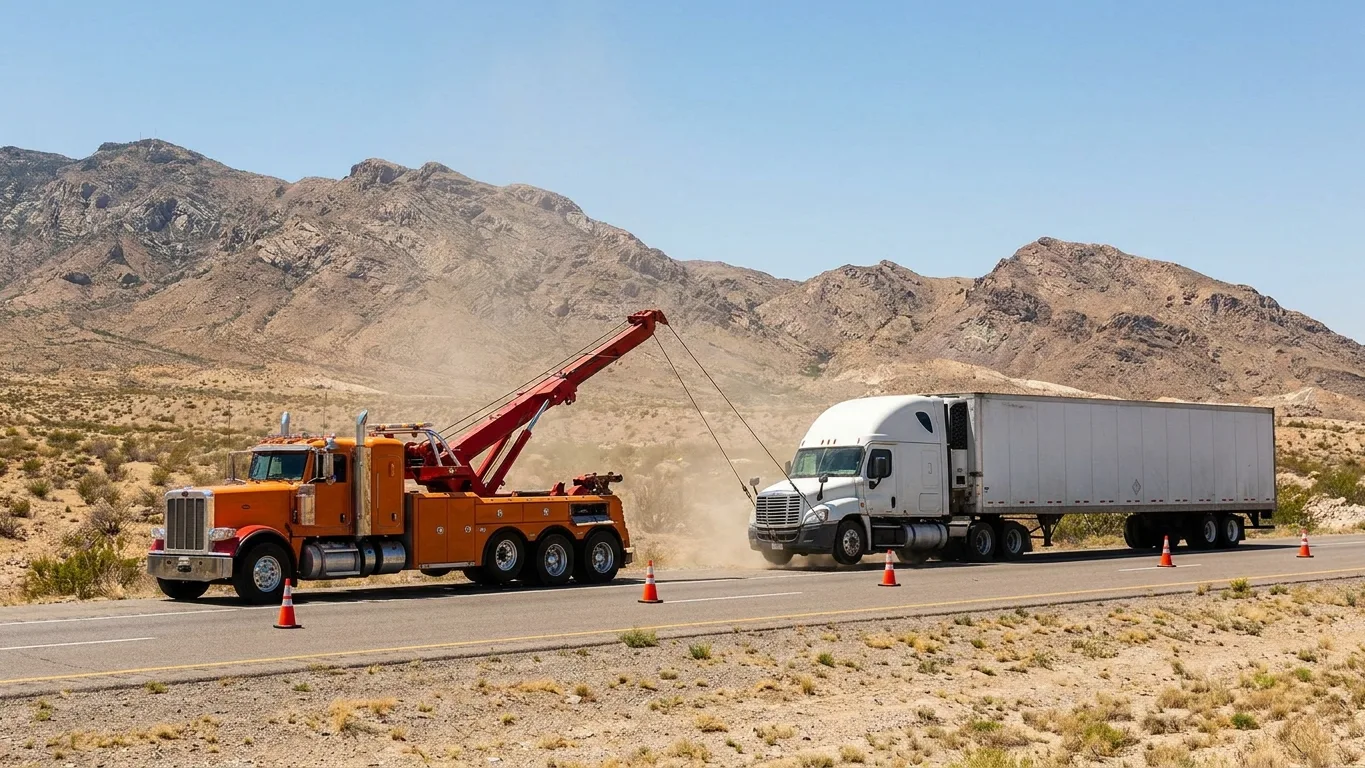
Call (915) 615-2224 for a heavy-duty wrecker, then get clear of the cab. When a semi breaks down on I-10 in El Paso, a regular flatbed can’t move it. A loaded tractor-trailer runs up to 80,000 pounds, so it takes a heavy-duty wrecker or a rotator rated for that weight, and the wrong truck showing up just burns time you don’t have on a live freeway. I-10 is a major freight corridor through El Paso, feeding the border crossings, so a stalled big rig here backs up traffic in both directions fast. Here’s how to handle it, where trucks fail most, and what heavy-duty towing actually runs.
What to do when a semi breaks down on I-10 in El Paso
Get the truck as far onto the right shoulder as the rig will roll, set your hazards, and drop your reflective triangles at the spacing your DOT training calls for: one about 10 feet behind the trailer, one at 100 feet, and one at 200 feet back up the road. On a fast interstate that third triangle is the one that saves you, because it gives traffic room to move over before they reach you.
Then get out of the cab on the passenger side, away from traffic, and stand behind the guardrail or well off the shoulder while you call. Do not stand between your truck and the flow of traffic to make the call, and do not try to work under a loaded trailer on the shoulder. Give the dispatcher the truck’s location by mile marker or nearest exit, the gross weight if you know it, whether the trailer is loaded, and what failed, air, engine, transmission, or a blown steer tire. That’s what tells us which piece of equipment to roll.
Where big rigs break down most in El Paso
El Paso is a freight town, and the same stretches that move the most trucks produce the most breakdowns.
The Spaghetti Bowl at I-10 and US-54 is the tightest, busiest interchange in the city. Loaded trucks climbing the connectors under summer heat push cooling systems and transmissions hard, and there’s almost no shoulder to limp onto. If you feel a truck losing power on the approach, it’s better to hold the right lane and get to a wider spot past the interchange than to stop inside it.
The Border Highway (Loop 375) and the approaches to the Ysleta-Zaragoza and Bridge of the Americas crossings see heavy drayage traffic all day. Trucks staging for the ports of entry sit idling in heat, then pull hard from a dead stop, which is rough on clutches, air systems, and older diesels. Our towing help along the Border Highway covers the passenger-car side of that corridor, but the commercial breakdowns cluster in the same spots.
The long east and west runs of I-10, out past Horizon City and Socorro heading toward the county line, are where blown tires and overheated engines pile up in summer. There’s no shade and no windbreak, and a steer tire that fails at highway speed on that flatland turns into a recovery, not a repair. Heavy-duty demand runs highest out in Socorro and the eastern county, where the industrial parks and the freight route meet.
What kind of tow truck moves a semi?
Not a flatbed. Cars and light trucks ride on a rollback; anything in the commercial-truck class needs heavy-duty towing with a wrecker built for the load. There are two tiers, and it matters which one you need:
- A heavy-duty wrecker handles box trucks, delivery vans, dump trucks, buses, and bobtail tractors, up to around 50,000 pounds. If your rig is running empty or you dropped the trailer, this is usually the truck that comes.
- A rotator is the crane-armed heavy that lifts and recovers a fully loaded tractor-trailer, an overturned rig, or a truck off an embankment. When a loaded 80,000-pound combination has to be uprighted or winched back onto the road, this is the equipment that does it.
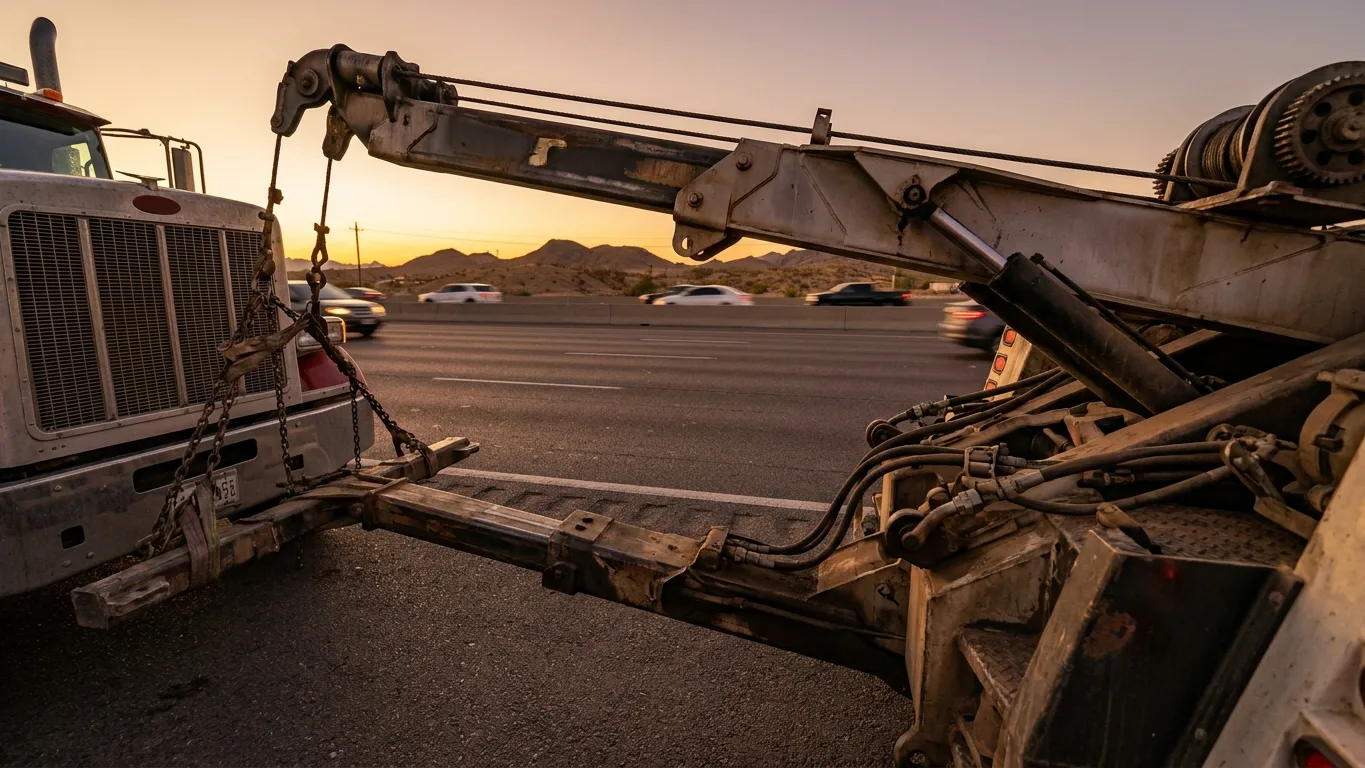
Tell the dispatcher the truck’s weight and whether it’s loaded, and the right tier rolls the first time. Guessing low to save money just means a second truck and a longer wait on the shoulder.
What happens to the trailer and the freight?
That depends on what failed. If the tractor is down but the trailer is fine, the cleanest move is often a hookup that pulls the whole combination to a repair yard or a drop lot. If the trailer has to come off, or the cargo has to be transferred to another truck to get the weight legal for towing, that’s a recovery job, and the heavy operators handle the cargo transfer as part of it.
If the rig jackknifed, rolled, or slid off into the sand, that’s accident recovery and winch-out work, not a straight tow. A rotator and a recovery crew get the truck stabilized, uprighted, and back on its wheels before anything moves. On a live interstate the priority is clearing the lane safely, so expect the dispatched crew to work with any El Paso PD or DPS units already on scene.
How much does heavy-duty towing cost in El Paso?
More than a car tow, and priced differently. A passenger tow runs on a hook fee plus mileage, but commercial recovery is usually billed by the hour for the truck and crew, plus mileage, because the job takes bigger equipment and more people. Expect a heavy-duty call to start well above a standard tow, and a full rotator recovery to run higher again depending on weight, scene, and time on site.
The honest answer is that no one can quote a jackknife recovery sight unseen, but a straight heavy-duty tow of a bobtail or a light-loaded truck is more predictable. If you want to understand the pieces that move any tow bill up or down, our guide to what a tow costs in El Paso breaks down the passenger side, and the same factors, distance, weight, and time of day, scale up for commercial work. For a truck that needs to move across the state or across a state line to a home terminal, long-distance towing gets quoted flat so there’s no surprise mileage at the other end.
Why El Paso truckers can’t afford the wrong truck
A driver sitting on I-10 with a down rig is burning a delivery window, hours of service, and sometimes a reefer full of cargo that can’t sit in the heat. That’s the whole reason the first call matters: describe the truck accurately, and the equipment that shows up can actually move it. Quick Tow El Paso dispatches commercial-rated wreckers across the metro and out to the county line, day and night, whether the rig is down near the Zaragoza bridge overnight or on the west side at noon.
Frequently asked questions
Can a flatbed tow a semi-truck?
No. A standard flatbed or rollback is built for cars and light trucks, not for the weight of a commercial tractor-trailer. Moving a semi takes a heavy-duty wrecker for a bobtail or empty rig, or a rotator for a fully loaded or overturned truck. If you call for a semi tow, tell the dispatcher the weight and whether the trailer is loaded so the right class of truck comes the first time.
What do I do first when my truck breaks down on I-10 in El Paso?
Get the rig as far right onto the shoulder as it will roll, turn on your hazards, and set your reflective triangles at 10, 100, and 200 feet behind the trailer. Then exit on the passenger side away from traffic, stand behind the guardrail, and call (915) 615-2224 with your mile marker or nearest exit, the truck’s weight, and what failed. Don’t stand in the traffic side of the truck or work under a loaded trailer on the shoulder.
How much does it cost to tow a semi in El Paso?
Heavy-duty and recovery work is billed differently from a car tow. Instead of a flat hook fee plus mileage, commercial calls are usually charged by the hour for the truck and crew plus mileage, because the job needs bigger equipment and more people. A straight tow of a bobtail or lightly loaded truck is more predictable than a jackknife or rollover recovery, which can’t be quoted accurately until the operator sees the scene.
Who handles a jackknifed or rolled-over truck?
That’s accident recovery, not a straight tow. A rotator and a recovery crew stabilize the rig, upright it, and winch it back onto its wheels before it can be towed, working alongside any police or DPS units managing the scene. The trailer or cargo may have to be offloaded to get the weight legal to move. It’s slower and more involved than hooking a running truck, which is why the crew needs an accurate description before they roll.
Do you tow commercial trucks in Socorro and the outer El Paso county?
Yes. Heavy-duty demand is actually highest out past Horizon City and Socorro, where the freight route and the industrial parks meet, so commercial-rated wreckers dispatch across the full metro and out to the county line. A truck down on the eastern stretch of I-10 gets the same dispatch as one downtown, day or night.
Down on the freeway right now? Call.
If you’re sitting on the shoulder with a rig that won’t move, the fastest thing you can do is call and describe the truck. Give Quick Tow El Paso the weight, whether it’s loaded, and what failed, and the right heavy-duty wrecker or rotator gets sent, not a truck that has to turn around and swap for a bigger one.
Call (915) 615-2224. We dispatch commercial-rated equipment across the whole El Paso metro, day and night, and we’d rather send the truck that can actually move you the first time.