You already think the vehicle needs a deck, not a wheel lift. Dispatch still needs the reason, the condition, and the pickup path before an operator can confirm the setup. Say those details first and the right truck is more likely to roll.
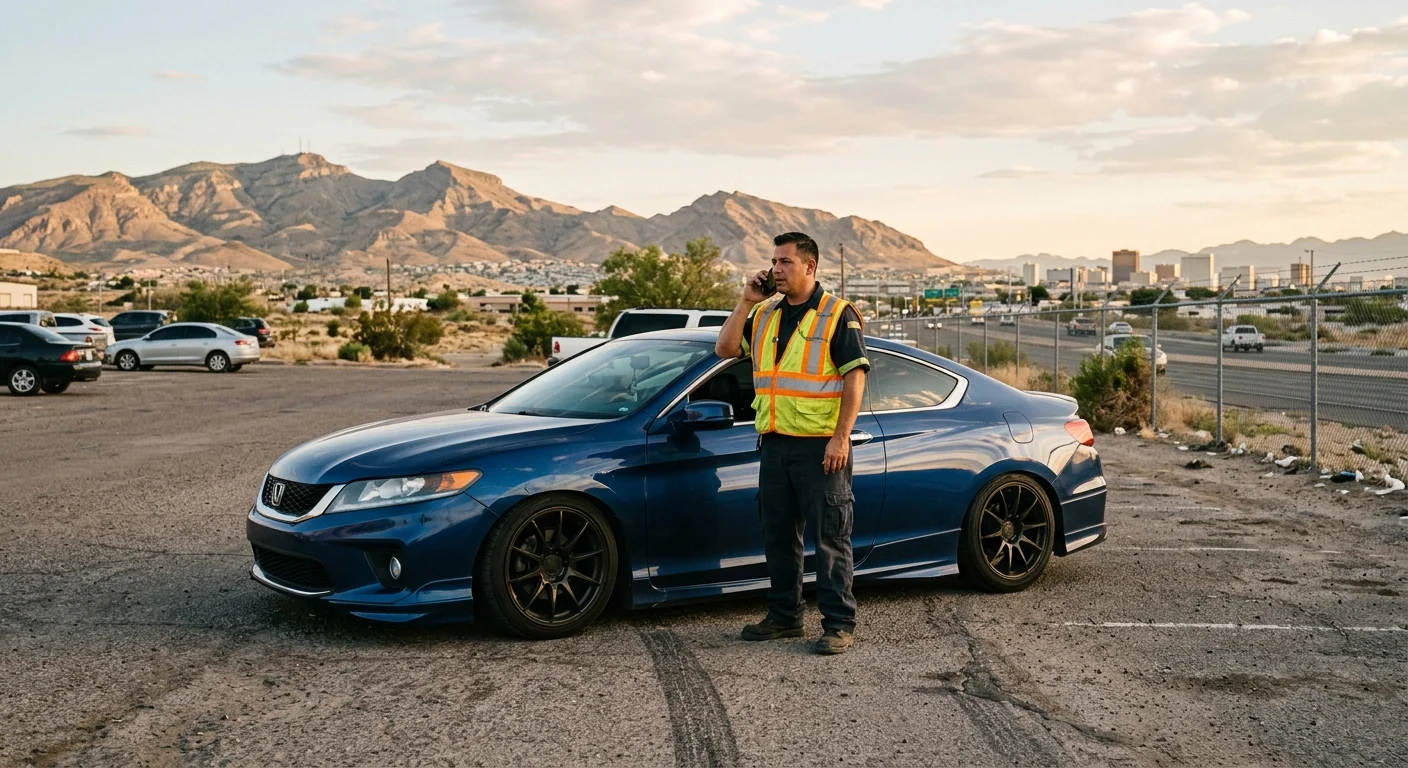
Start with why you are asking for a flatbed
If you are calling for flatbed towing in El Paso, Texas, start with the reason. The operator does not see the car yet. You do. One clear sentence beats a long story.
A lowered car in a Mesa Street lot is a different job than a wreck on I-10 near Zaragoza. A classic in a Westside driveway under the Franklin Mountains is a different job than a pickup on North Loop Drive in the Lower Valley. A sedan that will not roll in a downtown garage is a different job than a truck on a Horizon Boulevard shoulder. Name the situation, then stop talking until dispatch asks the next question.
Say what you are trying to protect or what will not move. The car sits low. A shop told you to request a deck. You do not want drive wheels on the pavement. A wheel is bent, locked, or gone. The vehicle will not go into neutral. Those are useful reasons. They are not a diagnosis, and they do not decide the truck by themselves.
A flatbed is a truck with a platform. The vehicle rides on that deck instead of being pulled by a set of wheels. That is the whole definition. It is one method, not a promise that every car, every AWD, or every scrape needs it. If you want the method side by side with a wheel lift, read our flatbed vs wheel-lift comparison. This page is the call itself.
Tell dispatch where you are in the same breath. El Paso is not one road. Central and the Lower Valley, the Northeast on US 54, the Westside under the Franklins, Horizon City and Socorro out east, and Sunland Park across the New Mexico line all change access and the run. Name the street, the nearest cross street, and the city. “Near the mall” or “off I-10” is not an address.
If you are on a shoulder, say which direction you face. Westbound I-10 toward Las Cruces is not eastbound toward the Lower Valley. Loop 375 on the Border Highway is not Transmountain. FM 76, the road locals call North Loop Drive, is a two-lane rural stretch with 4-foot shoulders from Horizon Boulevard toward Fabens. A deck truck needs room to set up there. Say you are on that corridor if you are.
Keep the first minute of the call to three facts: you want a flatbed towing service in El Paso, Texas, why you want it, and the exact pin. Everything else can wait until dispatch asks.
Share drivetrain, clearance, and wheel condition
After the reason, give the vehicle. Make, model, and year first. Then how it drives when it drives. Two-wheel drive, all-wheel drive, or four-wheel drive. AWD towing in El Paso comes up a lot on crossovers and newer pickups. Tell them it is AWD. Do not tell them it must ride on a deck. The licensed operator decides whether a platform is the right setup once they hear the rest.
Clearance next, in plain words. The car is lowered. The air suspension is down. The spoiler sits close to the curb. The front bumper already scraped a driveway on Mesa Hills. You do not need a tape measure. You need a true picture. Low does not automatically mean a flatbed. It does mean the driver should hear it before they pick a truck.
Wheels decide more than people think. Say if a tire is flat, shredded, or missing. Say if a wheel is bent, locked, or turned against the curb. Say if the parking brake is stuck. A car that will not roll is a different load than a car that will. If you already know it will not go into neutral, say that. If you have not tried, say you have not tried.
Keys matter. If you have them, say so. If they are inside the car, say so. If it is a push-button and the battery is dead, say that. The operator needs to know whether the steering locks and whether the car can be put in neutral. Do not guess a loading method. Describe the car.
Pickups get their own line. If it is a Ram 1500 or any other troca, say 4x4 or 2WD, whether the bed is loaded, and whether it sits on aftermarket wheels. A crew cab in a Socorro farm lot is not the same as a short-bed in a Cielo Vista parking garage. Weight class helps if you know it. If you do not, the make and model is enough.
EVs and hybrids belong in this same breath. If it is an electric car with no charge, say it is an EV and that it will not roll under its own power. Do not invent a towing mode. Ask the operator what they need from the dash once they are on scene.
One more condition people skip: body damage. If a fender is folded into a tire, say which corner. If the car is sitting on a splash pan, say that. Photos help if you can send them after the call. A photo of the wheel, the ground gap, and the stall is more useful than a wide shot of the lot.
Describe pickup access without guessing the truck
Do not order a truck by name. Describe the hole it has to fit. Dispatch can route a licensed operator. You can tell them whether a long bed can even enter.
Start with the surface and the space. Open asphalt at a Horizon City strip center is easy to picture. A downtown garage with a low beam, a tight ramp, and a pay arm is not. An apartment carport off Dyer in the Northeast may have a height bar. A Westside driveway off Transmountain may be steep and short. A dirt pull-off on FM 76 near Clint may have no shoulder to speak of. Say which of those you are in.
Gates and codes belong on the first call. If a guard has to lift an arm, say so. If the stall is in a stacked garage on Texas Avenue, say the level and the nearest elevator. If the car is nose-in against a wall, say it. If you can pull it out into the aisle, say that too. The operator should not learn the squeeze when they arrive.
Traffic around you is part of access. A disabled car in the right lane of US 54 is a live lane. A car on the shoulder of Loop 375 above the river is wind and a drop. A car in a Walmart lot off Lee Trevino is a parking job. Texas’s Move Over law covers tow trucks using proper lights on the highway. Other drivers must change lanes or slow. That does not make the shoulder safe. Stay out of the travel lane if you can, and say which lane you occupy.
If you are across the state line in Sunland Park, say New Mexico in the first sentence. The pickup is no longer an El Paso city street. Do not guess a price for that run. The operator who takes the job sets it. Confirm the number with that operator before anything is hooked.
You can request a type of truck. You cannot assign the equipment. “I need a flatbed, and the stall is a one-car carport with a 6-foot opening” is a complete access report. “Send the biggest deck you have” is not. Leave the truck choice to the person who will stand there with the car.
If you are missing other basics, the details to have ready when you call for a tow covers name, callback number, and how to read a pin. Use that list. Then come back to the flatbed facts on this page.
Confirm the destination before the operator rolls
A deck job is not finished at pickup. The operator still has to know where the car is going, and whether that place can take a long truck. Say the destination before anyone leaves the lot.
Shop name and street address beat “the Honda place.” If it is a dealer on the Eastside, name it. If it is a house in Kern Place, give the number and the cross street. If it is a lot in Socorro or a driveway in Horizon City, say the city. Horizon City is its own town. Socorro is its own town. A drop on Alameda is not a drop on Mesa.
If the car is going home, say whether the street is a cul-de-sac, an alley, or a gated community. A platform needs room to unload. A narrow Westside street under the mountain can be tighter than I-10. A farm driveway off North Loop Drive can be long, soft, and dark. Describe it the same way you described pickup.
If the destination is in New Mexico, say that before the truck is assigned. Sunland Park, Anthony, and Santa Teresa are close on a map and a different state on a ticket. No price for a New Mexico run belongs on this page because we do not publish one. Ask the operator for their figure and wait for it.
Do not treat the first number you hear as a total. For a light-duty hookup in Texas, the starting figure we quote is a $95 hookup plus a per-mile rate. That is a start, not the bill. The operator who performs the work sets the rest. Confirm it with that operator before the car is loaded. There is no approved flat rate, no after-hours promise, and no “same price anywhere in the county” line.
If this is not a job you asked for, stop and sort consent. A private-property removal you did not request is a nonconsent tow under Texas Occupations Code Chapter 2308. Statewide TDLR caps apply to those tows. They are not this brand’s prices. If you summoned the truck, you are in a consent job. Destination, access, and the operator’s price are the whole conversation.
Name who will meet the truck at the other end. A closed shop on a Sunday does not take a drop just because you named it. If you need the car left in a specific stall, say which one. If a service writer has to be present, say when they said they would be there. The operator cannot invent a receiving plan.
Let the operator confirm the equipment
You can ask for a flatbed. The person who holds the license confirms whether that is the right gear. Quick Tow El Paso is a dispatch line. We answer, we take the facts, and we connect you with a licensed, insured towing operator. We do not own the truck, we do not run a yard, and we do not stand on the shoulder with the winch.
Texas towing on public roads is a TDLR license, not a city sticker you can assume. Operators fall into consent, private-property, and incident-management classes depending on the work. Companies that control tow trucks on public roadways must be licensed too. You can look an operator up in TDLR’s license search before you pay. Search by name, city, or license number.
Once the driver is on scene, let them look. They will check the wheels, the ground gap, the stall, and whether the car rolls. They may agree a platform is the right call. They may tell you a different setup will work. That is their job. Do not argue them into a method from a forum post. Do not accept a method you do not understand. Ask them to say, in one sentence, how the car will ride and what it will cost.
Nothing in Texas law, and nothing on this site, is a damage guarantee. Loading is work. The honest version is that you described the car well, the operator chose the gear, and you agreed on the destination and the price before the hookup. If you want that in writing from the operator, ask them. We cannot issue their ticket.
If law enforcement is already there, say so. A crash on I-10 or Loop 375 may already have a wrecker assigned. That is a different path than a consent call you placed from a parking lot. Give the officer’s direction to dispatch so we do not send a second truck into a scene that is already spoken for.
Stay where the driver can find you. Hazards on, if they work. People out of the travel lane. Callback number that actually rings. If you have to leave the car, say where the keys are and who can release it. The operator still needs a person who can authorize the tow.
The last check is small and it saves the whole run. Repeat the pickup pin, the reason you asked for a deck, the drivetrain, the wheel condition, and the drop address. If any of those is wrong, fix it before the truck moves. A flatbed that shows up at the wrong garage in central El Paso does not help a car sitting in Sparks.
When to call us
Call when the vehicle needs a licensed towing operator and you want a flatbed considered for the load, the clearance, or the wheels. Have the reason, the drivetrain, the access, and the drop address ready. Call us at (915) 615-2224 and we’ll connect you with an operator who handles this work.