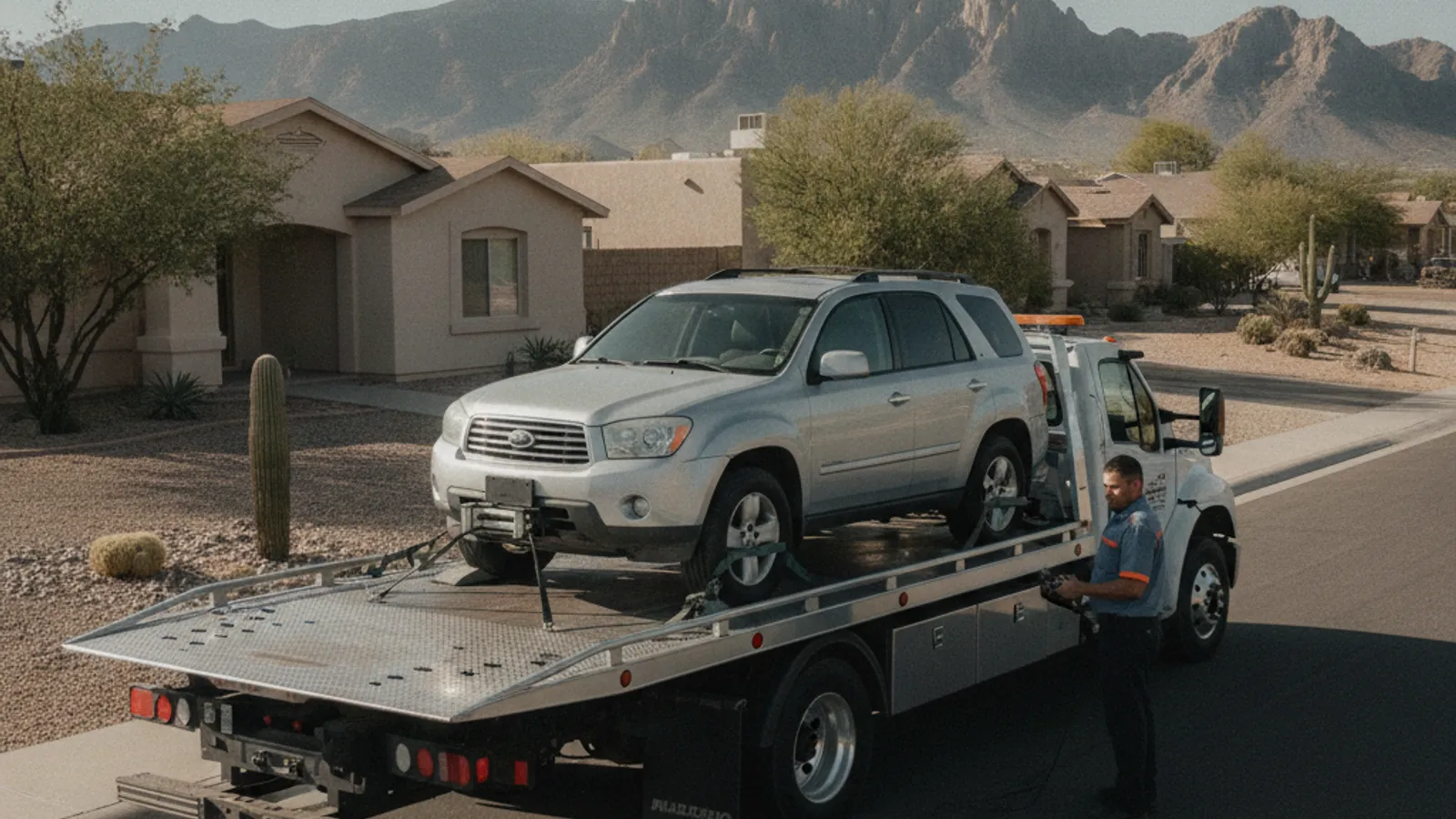
Most tows in El Paso work fine on a wheel-lift truck. But if you drive an all-wheel-drive SUV, an EV, a lowered car, or anything with a damaged wheel, a wheel-lift can do real damage on the way to the shop, and a flatbed is the only safe call. Here’s how to tell which one your car needs, what each one costs, and what to do if the wrong truck shows up.
What’s the difference between flatbed and wheel-lift towing?
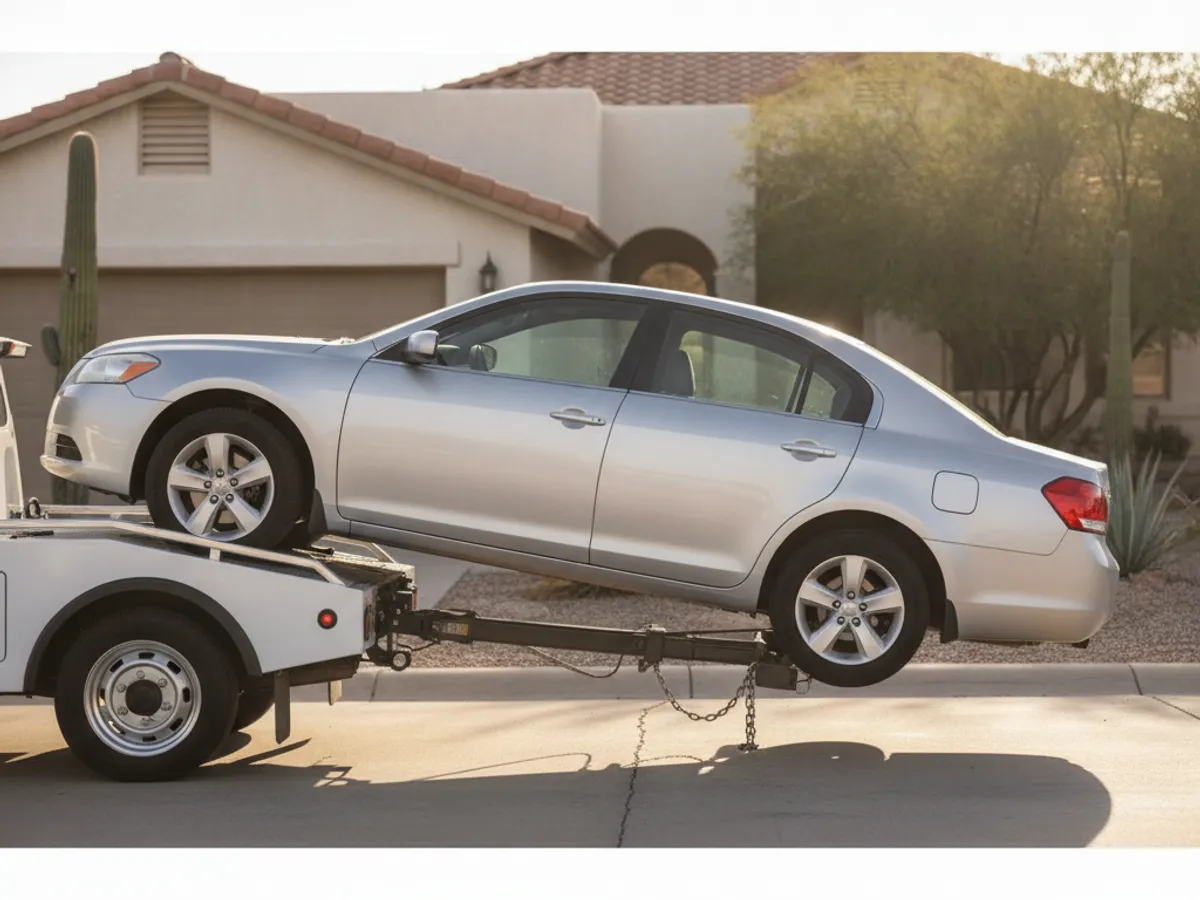
A wheel-lift truck slides a metal yoke under your car’s drive wheels and lifts just that end off the ground. The other end keeps rolling on its own tires for the whole trip. It hooks up fast, has a small footprint, and works fine on a standard front-wheel-drive or rear-wheel-drive sedan.
A flatbed, or rollback, tilts its entire bed down to the pavement and winches your car up onto a flat deck with soft straps around each wheel. All four wheels leave the ground. Nothing drags, nothing rolls, and nothing spins that shouldn’t.
That last part is the whole reason the distinction matters. It’s not about ride comfort. It’s about what’s turning under your car while it’s moving behind the truck.
When your car needs a flatbed tow in El Paso
A few situations call for a flatbed every time, no exceptions:
- All-wheel-drive or 4WD vehicles. A wheel-lift leaves two wheels on the ground and spinning. On an AWD or 4WD car, that sends power backward through a transfer case or center differential that was never built to run without the engine driving it, and it can wreck the internals in a few miles.
- EVs. Tesla, Rivian, Lucid, Mustang Mach-E, Hummer EV, any electric vehicle. The drive motors stay mechanically connected to the wheels, so dragging them on a wheel-lift can fry the motor the same way an AWD transfer case gets destroyed.
- Lowered cars and anything with a body kit or front splitter. A wheel-lift raises only one end. The other end, and any low-hanging splitter or exhaust, can scrape or catch on the pavement the rest of the way.
- A damaged, flat, or locked wheel. If a wheel won’t turn or isn’t attached right, it can’t safely roll on its own, which rules out a wheel-lift regardless of drivetrain.
- Post-collision vehicles with frame or suspension damage. A bent control arm or a cracked frame rail can fail further under the stress of rolling on the ground.
- Motorcycles. There’s no wheel-lift equivalent for two wheels. Every motorcycle tow goes on a flatbed with wheel chocks and tie-downs.
- Classic and exotic cars. Owners don’t want a yoke anywhere near the bodywork, and a flatbed keeps the car off the road entirely.
When wheel-lift towing is the right call
If your car is a standard FWD or RWD sedan, crossover, or light truck, with no damage to the wheels or suspension, a wheel-lift is the faster, cheaper option. It’s also the better fit for tight spots. Wheel-lift trucks clear 6’8” on most models, which gets them into apartment garages and downtown parking structures a full-size flatbed can’t enter. If your building has a lower clearance than that, tell us on the call and we’ll route a specialty mini-truck instead.
Wheel-lift is also the right tool for a dead battery that needs both a jump and a short tow, or a car that just needs to move a few miles to the nearest shop. There’s no reason to pay flatbed rates for a job a wheel-lift handles just as safely.
What about RVs, box trucks, and heavier vehicles?
Flatbed and wheel-lift cover cars and light trucks. Anything heavier, an RV, a box truck, a loaded trailer, needs heavy-duty towing with a bigger wrecker rated for the weight. That equipment reaches Socorro, Horizon City, and the rest of the county for RV and trailer towing too. If you’re not sure which category your vehicle falls into, call and describe it. We’ll tell you honestly which truck is coming.
Does flatbed towing cost more in El Paso?
Not on the rate itself, and it’s worth knowing why before you’re standing on the shoulder comparing quotes. Flatbed and wheel-lift towing both start with the same $95 hookup, then a per-mile rate. A flatbed can take a little more time on scene because of the extra equipment involved in loading a vehicle safely, but that’s time, not a different rate structure.
If you want the fuller breakdown of what moves a tow bill up or down, distance and vehicle size, see our full guide to tow costs in El Paso. And if your car got towed without your say-so and you’re trying to sort out what a company can legally charge, that’s a different question with its own answer in our guide to El Paso’s non-consent tow fee caps.
Why this matters more in El Paso than some cities
El Paso runs more AWD trucks and SUVs per household than a lot of Texas metros, partly because of Fort Bliss rotating families in from colder duty stations who kept their all-wheel-drive vehicles, and partly because the terrain around the outer parts of the county, Socorro, Horizon City, Chaparral, Sparks, rewards higher ground clearance. Those same outlying areas also have longer stretches of unpaved shoulder, which is exactly where a lowered car or a lifted 4WD truck is most likely to need a careful, flatbed-only recovery instead of a wheel-lift shortcut. If your tow is starting from one of those areas, our towing coverage in Sparks and the rest of the metro includes both truck types every day, so the right one shows up the first time.
Frequently asked questions
What is wheel-lift towing?
A wheel-lift truck has a metal yoke that slides under your car’s drive wheels and lifts just that end off the ground. The other end rolls on its own tires for the trip. It’s faster to hook up than a flatbed and fits into tighter spaces, but it only works safely on standard front-wheel-drive or rear-wheel-drive vehicles with no wheel or suspension damage.
Why does an AWD or 4WD vehicle need a flatbed tow?
Because a wheel-lift leaves two wheels on the ground and turning. On an all-wheel-drive or four-wheel-drive vehicle, those wheels are still mechanically connected to a transfer case or center differential that expects the engine to be running. Spinning it without power flowing through the system the way it’s designed to can burn out internal components in a matter of miles. A flatbed gets all four wheels off the ground, so nothing turns that shouldn’t.
Can a wheel-lift tow truck damage my car?
Only if it’s the wrong tool for your vehicle. On a standard FWD or RWD sedan with healthy wheels and suspension, a wheel-lift is safe and it’s what most tow companies use for routine calls. The risk shows up specifically with AWD or 4WD drivetrains, EVs, lowered cars, or a vehicle with a damaged wheel, all of which need a flatbed instead.
Does flatbed towing cost more than wheel-lift towing in El Paso?
No. Flatbed and wheel-lift towing both start with the same $95 hookup, then a per-mile rate. A flatbed can take a little more time on scene because of the extra equipment involved in loading a vehicle safely, but that’s time, not a different price.
Can you flatbed tow a motorcycle or classic car in El Paso?
Yes. Motorcycles always go on a flatbed with wheel chocks and tie-down straps, since there’s no wheel-lift option for two wheels. Classic and exotic cars also go on a flatbed by default, so the bodywork and undercarriage never touch a yoke or the road.
Not sure which truck you need? Just call.
Most people calling for a tow don’t know their transfer case from their transmission, and they shouldn’t have to. Tell us the year, make, and model, or just describe what’s wrong, and Quick Tow El Paso will tell you honestly whether a flatbed or a wheel-lift is coming, before you agree to anything.
Call (915) 615-2224. Both truck types are available across the whole El Paso metro, every day, and we’d rather send the right one the first time than have you pay for a repair we could have prevented.