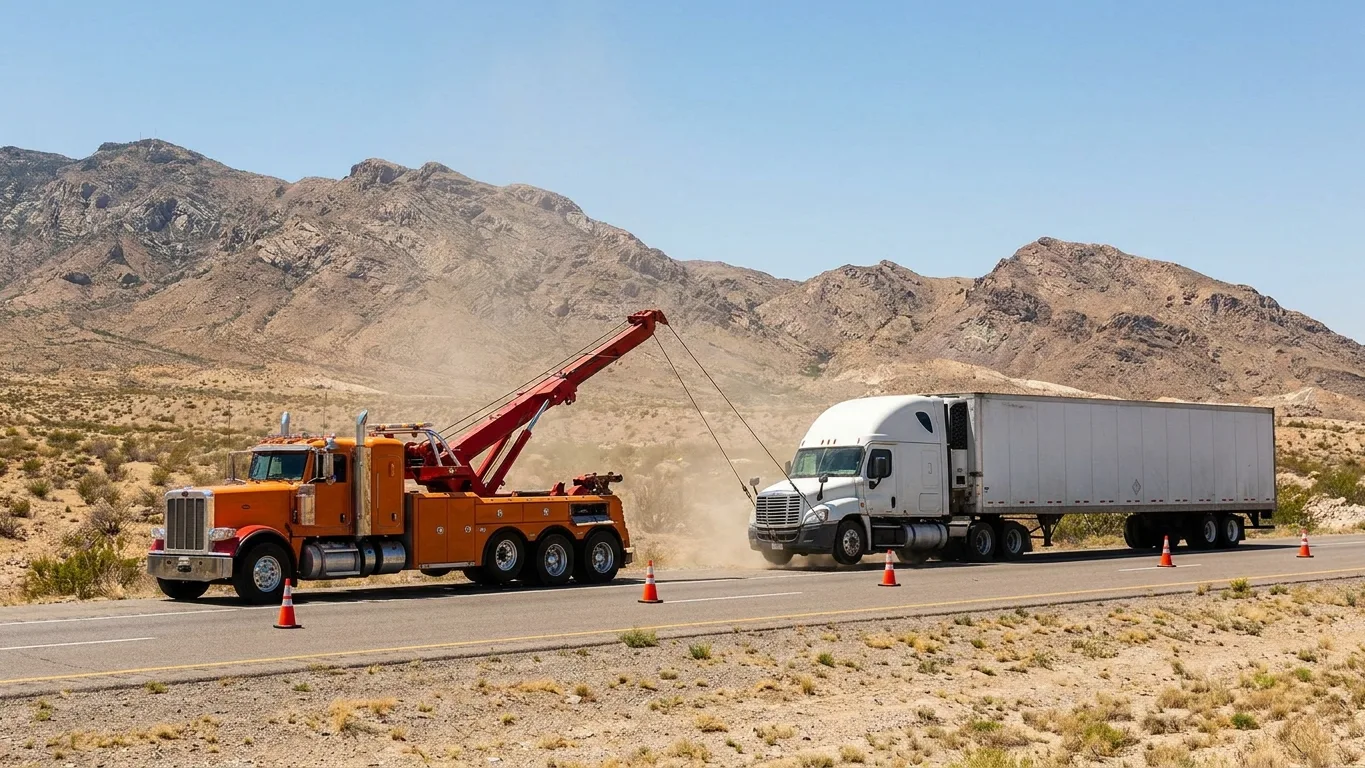
Long-distance towing from El Paso runs on a base hookup fee plus a per-mile rate once you’re past the local service area, and the per-mile number is what makes it different from a routine tow across town. A short in-metro pull is a flat-ish job. A tow out to Las Cruces, Alamogordo, or further up I-10 toward Van Horn is priced on distance, vehicle weight, and whether the truck has to deadhead back empty. Here’s what actually drives that number, and when a tow truck is the right call instead of a car shipper.
When does a tow count as long-distance
Inside El Paso and the near suburbs, towing is priced the normal way: a flat hookup, then a short per-mile rate that barely moves the total. Once a job crosses roughly 25 to 30 miles outside the metro, most companies switch to a dedicated long-distance rate, because the truck is now committing a driver and a vehicle to a round trip that could eat half a day.
That threshold matters in El Paso specifically because the city sits at the edge of three states. Las Cruces is about 45 miles up I-10. Alamogordo, over the pass on Highway 54, is closer to 90. Deming, headed west, is another 60 or so past Las Cruces. All three are close enough that people call assuming it’s a normal tow, then get surprised by the rate change. It isn’t a markup. It’s a different job.
What long-distance towing costs from El Paso
For a standard car or light truck, expect a base hookup similar to a local tow, then a per-mile rate that applies for the full distance rather than just the last few miles. A hop to Las Cruces typically lands in the low hundreds. A run to Alamogordo or Deming climbs from there, and anything headed toward Midland, Odessa, or across into Arizona is priced as its own quote, not a standard rate card number.
Three things move the total most:
- Vehicle weight and type. A sedan on a flatbed costs less per mile than a pickup or an SUV, and a heavy-duty vehicle needs a bigger truck at a higher rate.
- Deadhead distance. If the tow truck has to drive out empty before it ever hooks your car, that mileage often gets billed too, especially for a pickup far from El Paso’s normal service radius.
- Road and weather. A dust storm on I-10 or ice on the pass toward Alamogordo slows the run and can push the quote up if the company has to reroute or wait it out.
Ask for the total price before the truck leaves, not just the per-mile rate. A quote that only states the mileage number leaves the hookup fee, the deadhead charge, and any after-hours add-on to surprise you at drop-off. For what a normal in-town tow runs by comparison, see how much a tow costs in El Paso.
Tow truck or car shipper: which one you actually need
A long-distance tow truck and a car shipping carrier solve different problems, and mixing them up wastes money either way.
Call a tow truck when your car broke down and needs to move today: a stall on I-10 near Anthony, a wreck outside the city, or a vehicle you need off a shoulder before it becomes a bigger problem. A tow truck hooks up on scene and drives your car directly to wherever it needs to go, usually the same day.
Call a car shipping carrier when the vehicle is drivable or already parked, there’s no urgency, and you’re moving it as part of a bigger relocation, like a job transfer or a permanent change of station. Carriers load several vehicles on one multi-car trailer and run scheduled routes, which is cheaper per mile but takes days, not hours. Fort Bliss soldiers moving a vehicle on PCS orders usually want a carrier, and we walk through that process separately in shipping a car from El Paso during a Fort Bliss PCS move.
What to have ready before you call
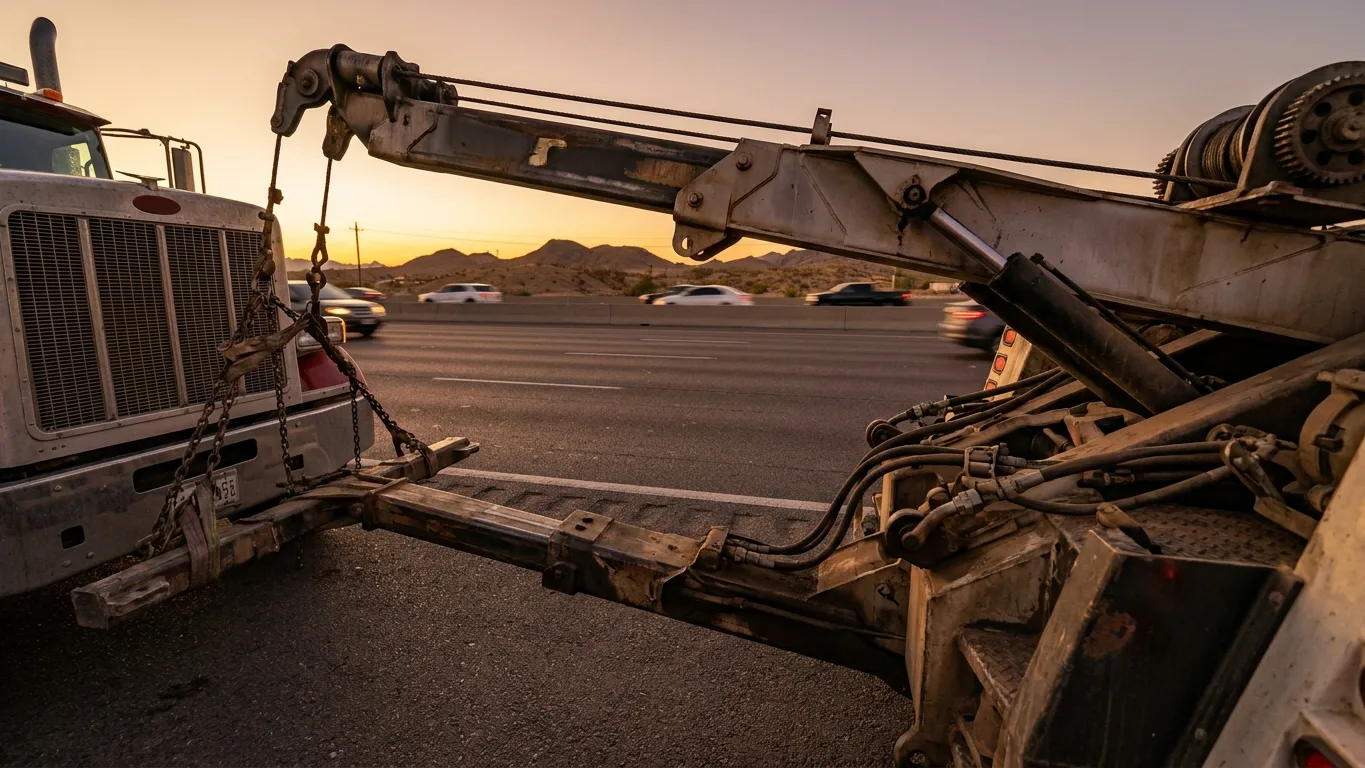
A long-distance quote firms up faster when you can answer a few questions up front: the exact pickup location, the exact drop-off address, the vehicle’s make and whether it’s a car, truck, or SUV, and whether it currently rolls and steers or needs to be winched onto the truck. A non-running vehicle usually costs more to move because it takes longer to load and needs a flatbed rather than a wheel-lift.
If the tow starts on I-10 itself, note the mile marker or the nearest exit rather than a general description. That matters most on the stretch through Anthony and out toward the New Mexico line, where the next exit can be miles away. Getting the location right the first time keeps you off the shoulder in El Paso’s summer heat, when highs normally run in the mid-to-upper 90s and individual days run hotter.
Heavy vehicles and long hauls
A long-distance move for anything bigger than a standard car or pickup, like an RV, a box truck, or a car hauler trailer, needs a truck rated for that weight from the start, not a standard flatbed that turns out to be too light once it’s loaded. We dispatch RV and trailer towing and heavy-duty towing for those jobs, and pricing is quoted by weight class and distance rather than a flat per-mile number. If the load is a semi or commercial rig broken down on I-10, that’s its own category covered in semi-truck towing in El Paso.
Frequently asked questions
How much does long-distance towing cost from El Paso?
It depends on distance, vehicle weight, and whether the truck has to drive out empty before the hookup. A run to Las Cruces, about 45 miles up I-10, typically lands in the low hundreds for a standard car. Longer runs toward Alamogordo, Deming, or beyond are quoted individually based on mileage and vehicle class.
At what distance does a tow become long-distance pricing?
Most El Paso towing companies switch from local flat rates to per-mile long-distance pricing once a job crosses roughly 25 to 30 miles outside the metro. Inside that radius, towing is priced the normal in-town way.
Should I use a tow truck or a car shipping carrier for a long move?
Use a tow truck when the vehicle needs to move now, like after a breakdown or a wreck on I-10. Use a car shipping carrier when the move is planned ahead of time and the vehicle can wait for a scheduled route, which costs less per mile but takes days instead of hours.
Does a non-running vehicle cost more to tow long-distance?
Yes. A vehicle that doesn’t roll or steer needs a flatbed and usually a winch to load it, which takes longer than hooking up a vehicle that can be pulled onto the bed on its own wheels. That extra time is usually reflected in the quote.
Can Quick Tow El Paso handle a tow all the way to New Mexico or West Texas?
Yes. We dispatch long-distance tows out of El Paso into southern New Mexico, including Las Cruces and Deming, and along I-10 toward West Texas. Call ahead of a scheduled move when you can, since long-distance jobs commit a truck and driver for longer than a local tow.
Get a real number before the truck leaves El Paso
A long-distance tow shouldn’t be a surprise at drop-off. Call Quick Tow El Paso at (915) 615-2224 with your pickup point, your destination, and what you’re moving, and we’ll give you the full price, hookup and mileage included, before anything is dispatched. We cover the whole El Paso metro and the routes beyond it, any hour of the day.