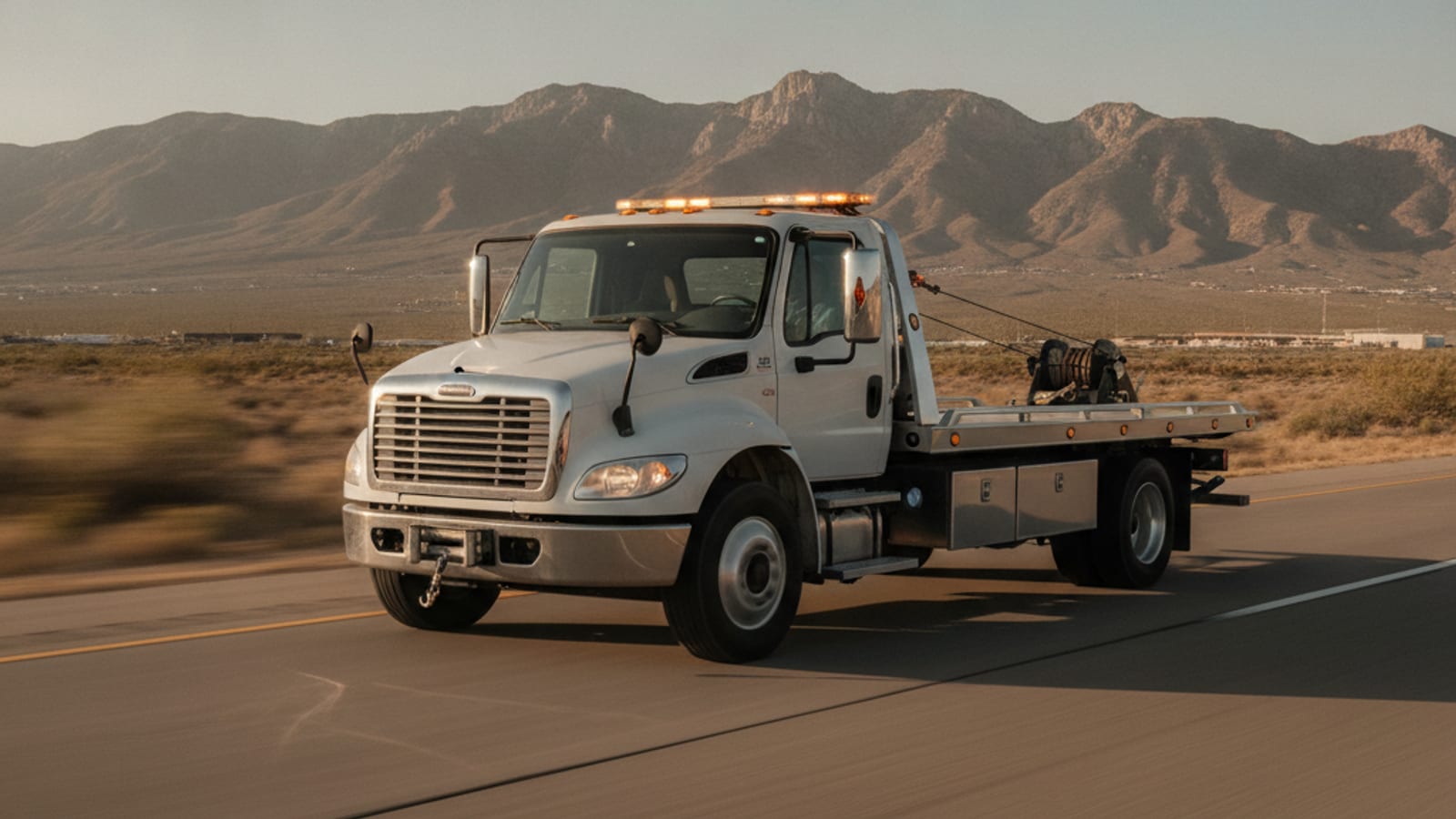
The honest answer is that nobody can tell you before they know where you are. Any towing company that quotes you an average over the phone without asking your location is quoting you a marketing number, not a real one. What decides your actual wait is which operator happens to be closest when your call comes in, how far they have to drive, what kind of road you are on, and what the traffic and weather are doing at that moment. Those things swing the answer enormously, and they are knowable, so this guide walks through each one. If you are trying to decide whether to keep waiting on a tow you already called, or whether it is even worth calling, this is the real breakdown.
Why the wait depends on where you are
Three things move the number more than anything else: how far the nearest available truck is from you, how many other calls are active at the same time, and what kind of road you are stuck on. A truck already working nearby on the I-10 corridor reaches a freeway shoulder sooner than one that has to come from across town to a residential street. Time of day matters too. Rush hour on Loop 375 or the Zaragoza approach adds real minutes even when the truck is not far away, because it has to fight the same traffic you are stuck in.
That is why the number has to come from the person who can see where the trucks actually are. Call and you get a real estimate for your exact location instead of a script. If your stretch of road is running long that day, you get told that, rather than a time nobody can hit.
What drives the wait, zone by zone
There is no fixed wait time for a zone, but there is a clear reason each part of the metro behaves the way it does. Call (915) 615-2224 for an estimate on your actual location.
| Zone | What drives the wait |
|---|---|
| City of El Paso (Downtown, West, Northeast, Northwest) | Densest operator coverage, close to I-10 and Loop 375 |
| Fort Bliss and nearby | Same core coverage, high call volume keeps trucks in the area |
| East Side and Horizon City | More distance from the city core, heavy I-10 commuter traffic |
| Northwest Valley and southern New Mexico | Farther out, plus active I-10 construction near the state line |
| Lower Valley (Socorro, San Elizario, Clint, Fabens, Tornillo) | Rural FM roads with no breakdown lane, 15 to 40-plus miles of driving |
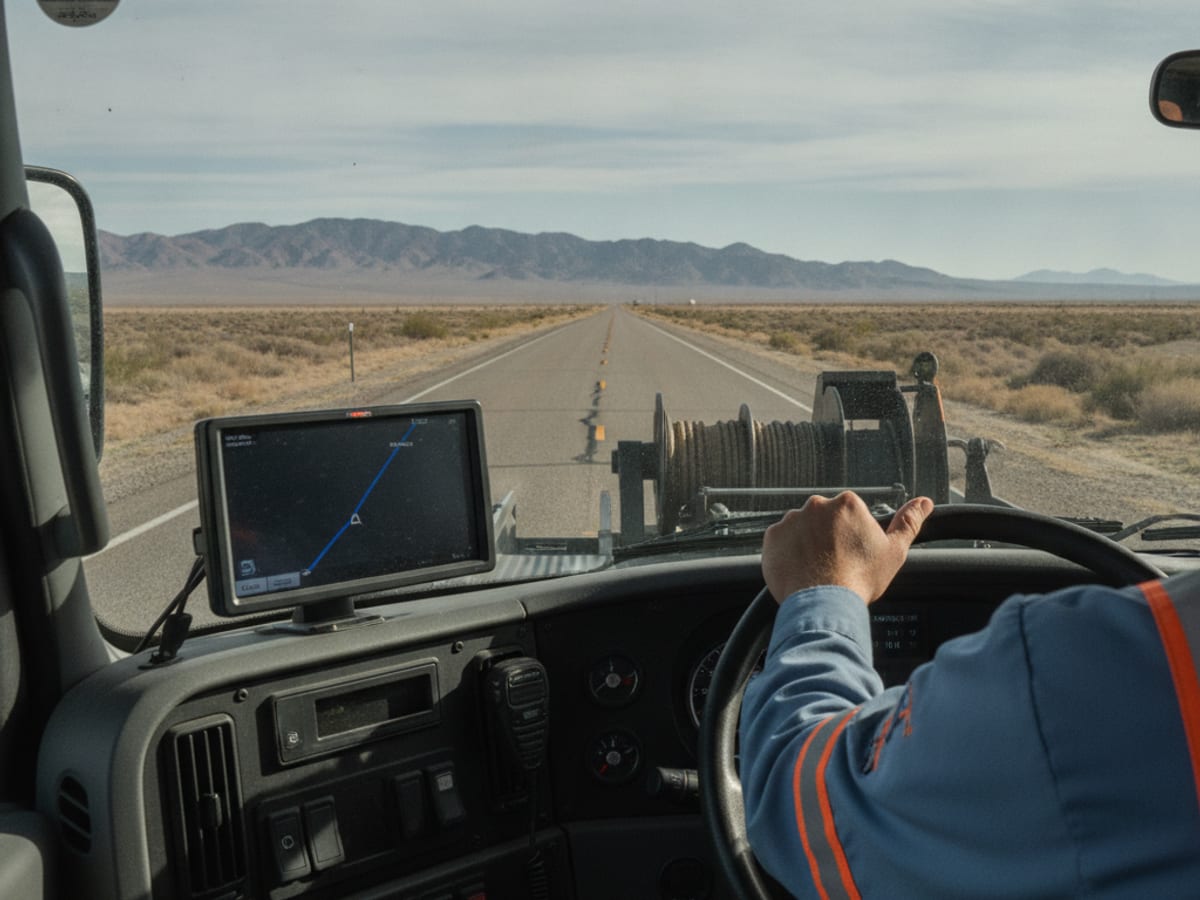
Why I-10 and Loop 375 calls tend to move faster
Freeway calls come with a clear location. An exit number or mile marker tells dispatch exactly where to send the nearest truck, and because I-10 and Loop 375 carry the highest volume of calls in the metro, operators are already working those corridors more often than not. A residential call still gets the same priority. It just depends on whether the closest truck happens to be five minutes away or across town when your call comes in.
That is true whether you are stuck on I-10 itself or on the Loop 375 Border Highway stretch along the Rio Grande. Both corridors see enough call volume that dispatchers know the access points cold, which is part of why a freeway call is usually simpler to route than one on a rural FM road.
TxDOT’s HERO patrol helps on the freeway, but it isn’t a tow
Since June 2020, TxDOT has run a free Highway Emergency Response Operator (HERO) patrol on El Paso’s three busiest freeways: I-10 from Transmountain Road to Horizon Boulevard, Loop 375 from I-10 West to Paisano, and US 54 from McCombs to Loop 375. HERO trucks change flat tires, bring gas, clear road debris, and help at crash scenes, Monday through Friday from 5 a.m. to 9 p.m. and Saturday through Sunday from 9 a.m. to 9 p.m. Call 915-790-4376 if you are stuck on one of those specific stretches during those hours and just need a quick fix.
What HERO will not do is haul your car away. It is built to clear the road, not to get your vehicle to a shop, your driveway, or an impound lot. For anything past a roadside fix, an emergency tow is what actually gets your car where it needs to go.
Why Horizon City, Socorro, San Elizario, and Fabens take longer
Horizon City sits more than 20 miles east of downtown on I-10, and even with three direct freeway connections into town, that distance alone puts it well behind a call closer in. See our Horizon City towing coverage for what the area looks like on a normal week.
Socorro, San Elizario, and Fabens are a different problem. They are not freeway towns, they are FM-road towns. Socorro Road (FM-258) runs 15 miles as an undivided rural highway with no real breakdown lane, so a stalled car sits fully exposed to traffic while a truck works its way out. San Elizario sits 17 miles southeast of the city at the far end of that same road, which by itself adds real driving time each way once you count the trip back to a shop. Fabens is farther out still, and its highest-risk breakdown spot is the I-10 and FM-793 interchange, where heavy agricultural truck traffic from area cotton and pecan operations runs at all hours. None of that traffic helps a truck get to you any faster. Coverage extends into the Lower Valley every day, but the drive out there is genuinely long, and an honest estimate will say so.
How dust storms and summer heat change the answer
El Paso sees significant dust events every year. When one rolls through, visibility drops fast, and trucks either slow down or hold their position until the wall passes, which adds real time to whatever your wait would otherwise have been. If you break down mid-storm, the safety steps matter more than the clock. Our guide on what to do if you break down during a dust storm walks through the exact steps.
Summer heat works differently. It does not slow a truck down directly, but it multiplies calls. Afternoons from June through August, when highs normally run in the mid-to-upper 90s, mean more dead batteries and more blown tires across the whole metro at the same time, which stretches available trucks thinner. That is when waits tend to sit at the long end instead of the short one, especially between 2 and 6 p.m.
How to get the fastest possible tow
A few things you control actually shave real minutes off the wait:
- Call as soon as you know you need a tow. Waiting to see if the car magically starts again just adds that waiting time on top of the drive time once you do call.
- Give the closest exit number, mile marker, or cross street. “I’m on I-10” tells dispatch almost nothing. “I’m at the Hawkins exit” gets a truck moving toward you immediately.
- Turn on your hazards and stay somewhere visible. A driver who cannot spot your car from the road loses minutes circling.
- Ask for the price structure and an ETA on the same call. You should know both before you hang up, not just one.
- Mention landmarks dispatch already knows, like Fort Bliss gates, a specific bridge crossing, or a mall entrance. It is faster than a street address neither of you can picture.
If you are stuck right now, the fastest thing you can do is stop deciding and start calling. (915) 615-2224 routes you to a licensed local operator, and the person handling your job can give you an arrival estimate for your exact location before you hang up.
Frequently asked questions
How long does it take for a tow truck to arrive in El Paso?
It depends on your location, which operator is closest, the road you are on, and the traffic and weather at that moment. Anyone who gives you a number before asking where you are is guessing. Call (915) 615-2224 and you get a real estimate for your exact location.
Is towing faster on I-10 or Loop 375 than in a neighborhood?
Usually, when a truck happens to already be working that corridor. Freeway calls come with a clear location, an exit or mile marker, and operators are often already on I-10 and Loop 375 because that is where most calls originate. A residential call gets the same priority, it just depends on how far the nearest available truck happens to be at that moment.
Why do Horizon City, Socorro, or Fabens take longer than downtown?
Horizon City is mostly a distance issue. It is more than 20 miles east of the city core even with direct I-10 access. Socorro, San Elizario, and Fabens are rural FM-road towns with no real breakdown lane and 15 to 40-plus miles of driving between the call and the nearest truck, which adds real time on both ends of the trip.
Does TxDOT’s HERO patrol tow disabled cars for free?
HERO covers set stretches of I-10, Loop 375, and US-54, Monday through Friday from 5 a.m. to 9 p.m. and weekends from 9 a.m. to 9 p.m., and it is free for flat tires, fuel, debris, and crash-scene help. It is not a substitute for a tow. If your car needs to go to a shop, your home, or an impound lot, you still need to call a towing company.
Do dust storms or summer heat slow down tow trucks in El Paso?
Yes, in two different ways. A dust storm cuts visibility and can hold trucks in place until it clears, adding time on top of whatever your wait would otherwise have been. Summer heat does not slow trucks down directly, but it multiplies calls, more dead batteries and blown tires between June and August, which stretches available trucks thinner and pushes waits toward the long end.
Should I wait to see if my car restarts before calling a tow truck?
No. Waiting costs you the exact thing you are trying to save, time. If your car will not start, is overheating, or cannot move safely, call right away and let dispatch start working on it while you are still deciding. You can always cancel if it turns out you do not need the truck. You cannot get back the twenty minutes you spent waiting to find out.