The car is already done. You’ve picked a scrap yard, and now you need someone to haul it there. Before a truck rolls, confirm five things so the operator we send is not standing in a driveway with a vehicle the destination will turn away.
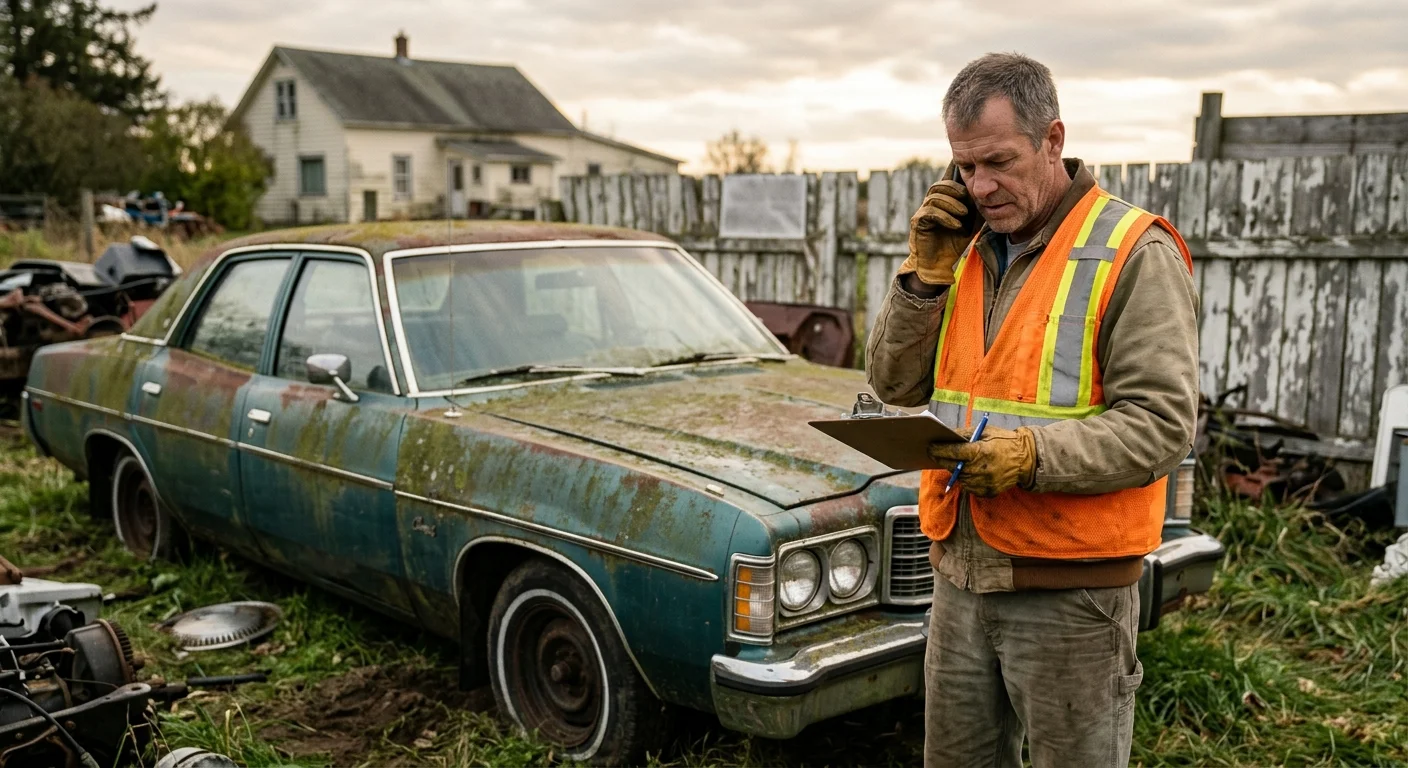
A tow car to scrap yard run in El Paso is a consent haul to an address you name. Quick Tow El Paso answers the line and connects you with a licensed, insured operator. You contract with that operator for the move. The yard is a separate business. Ask the yard what it takes, what paperwork it wants, and whether it pays anything. Then tell dispatch the pickup spot, the destination, and the condition of the car.
Confirm you’re authorized to move the vehicle
Start with who can send this car. If the title is in your name and the car sits on your own lot, this is usually a clean call. If it sits at a relative’s house in Socorro, in an apartment space off Mesa Street, or on a shared driveway in Horizon City, get the property owner’s okay first. Dispatch needs a person on site who can point to the car and say it is allowed to leave.
A tow from private property is still your job to clear with the people who control that ground. An HOA gate, a landlord, or a shop that has been storing the car can stop the truck at the curb. Have a name and a callback number for the person who will meet the operator. If you cannot be there, say so up front. The driver still needs someone who can confirm the right vehicle.
If the car is not yours, pause. A spouse, an adult child, or a roommate may have a story that sounds simple on the phone. The operator still has to know who is requesting the haul. Read who can have a car taken before you treat a family car as yours to send. A lienholder, a lease company, or a prior owner on the title can also block a destination drop. We could not confirm a city of El Paso rule that names every person who may authorize this kind of move. Ask the yard what name it needs on the intake, and ask the operator what they need in hand at pickup.
Location changes the conversation. A car on a Westside street under the Franklin Mountains is a different meet than a car on a farm lot off North Loop Drive. North Loop Drive is the local name for FM 76, the two-lane corridor through Socorro and Clint toward Fabens. Access there is tighter, and the person who owns the land may not be the person who owns the car. In Horizon City, pickup often sits off Horizon Boulevard (FM 1281), with I-10 access via Eastlake Drive. Tell dispatch which side of town you are on, the nearest cross street, and whether the car is on a public street or behind a fence.
Stay off a live travel lane while you wait. Texas’s Move Over law covers a permitted tow truck using proper lights. Other drivers must change lanes or slow. You still keep yourself and anyone with you out of I-10, US 54, and Loop 375 traffic. Authorization is about the car and the property. Safety is about where everyone stands once the truck is on scene.
Ask whether the destination will accept it
Call the scrap yard yourself. Do this before you ask for a truck. A destination that takes complete cars may refuse a shell with no engine, a truck missing a catalytic converter, or a vehicle with an open fuel leak. We could not confirm a single El Paso yard’s intake list, hours, or payout. Those rules belong to the yard. Get a yes on this year, make, model, and condition.
Have the VIN, plate, and a plain description ready. Say whether it rolls, whether it has a catalytic converter, and whether fluids are leaking. Ask if they want the battery in or out. Ask if four tires have to be on it. Ask whether they take trucks, vans, or only passenger cars. Ask if they need an appointment at the gate. A Lower Valley lot on Alameda (SH 20) may run a different gate than a yard closer to I-10. A destination in Sunland Park sits in New Mexico. That is a state line, not a neighborhood line. Tell the operator the destination is across that line before they quote the haul. We do not publish a New Mexico tow price.
Do not assume the yard will pay you. Some yards buy. Some only take the car. Some pay only after they weigh it. Quick Tow El Paso does not buy vehicles and does not run a yard. If money changes hands, it is between you and the destination. Ask them how they pay, when they pay, and what they need to see first. A number you heard from a friend in another city is not an El Paso figure.
Give dispatch the full destination name and street address, not “the scrap yard on the east side.” Operators in this network haul to the address you provide. They do not pick a yard for you. If the gate is on a dirt road, say so. If the yard only takes drop-offs during a window the operator has to hit, say so. A wasted trip usually starts with a destination that was never asked.
If you are still weighing scrap against a private sale, decide that before the hook. Transport is the piece we can route. The sale is yours. For the broader removal checklist, use junk car removal in El Paso: what to confirm. This page is narrower: you already have a destination, and you need that destination to take this car.
Gather available title and ownership records
Pull every paper you can find before pickup. Title, registration, insurance card, bill of sale, a photo of the VIN plate. The yard sets what it will accept. Texas title and salvage rules were not confirmed for this page, so treat the destination as the first stop for paperwork questions. If the title is missing, ask the yard what they will still take. Then tell the operator what you actually have, not what you hope to find later.
Bring photo ID that matches the name you gave dispatch. A driver’s license is the usual card. If the name on the title is a parent who has died, or a spouse who is out of town, say that before a truck is assigned. We could not confirm a waiting period, a bonded-title path, or a county tax-office step that applies in every El Paso case. The Texas agency that handles titles is the place to ask those questions. The yard is the place to ask what it will take today.
Keep the papers in your hand, not in the glove box. Once the car is on the truck, reaching back in is harder. If the operator needs to photograph the VIN, have the dash clear. If the yard wants a signed release, ask them to email or describe that form so you can have it ready. Do not sign a blank form on the hood if you do not know what it is.
A storage-lot retrieval is a different job. TDLR rules for getting a car out of a vehicle storage facility cover ID, proof of ownership, and payment of tow and storage fees. That is not a scrap-yard drop. If this car is sitting in a storage facility, you are retrieving it first, then arranging a second haul. Say so on the call so the operator is not sent to the wrong kind of gate.
Horizon City, Socorro, and central El Paso all sit in Texas. Sunland Park does not. If the title is a New Mexico title and the drop is a Texas yard, or the reverse, tell both the yard and the operator. Crossing the line can change what a destination will stamp. We could not confirm those intake rules here. The people at the gate can.
Describe the keys, wheels, and pickup access
Tell dispatch how the car sits, in plain words. Keys in hand, keys lost, or a key that turns but the car will not crank. Neutral or stuck in park. Four wheels, three wheels, or sitting on the dirt. A car that rolls can be a different hook than a car that has to be winched onto a flatbed. The operator chooses the truck. They can only choose well if you describe the car.
Missing wheels, a seized parking brake, or a curb against the frame all matter. So does a car wedged between a block wall and a second vehicle. In older Lower Valley lots along FM 76, the truck may need room to swing on a two-lane road with four-foot shoulders. In a Northeast apartment court, the limit is often a gate code and a speed bump. On the Westside, a steep driveway under the Franklins can change how the operator lines up. In Horizon City, say whether the car is on Horizon Boulevard frontage or back on a residential street off Eastlake.
Give the access, not a guess at equipment. Locked gate, dirt alley, low tree, HOA patrol, dog in the yard, carport too tight for a bed. If another vehicle has to move first, say who can move it. If the car has been sitting through an El Paso summer, mention that. July highs here normally run about 96°F. A car that has baked in a driveway can have brittle tires, a dead battery, and fluid that has cooked in the pan. The operator still needs to hear whether it rolls.
Empty the car. Glove box, trunk, console, under the seats, spare-key magnet. Personal papers and tools stay with you. If you want plates, ask the yard whether they come off before the drop. We could not confirm a local rule on plates for this page, so ask the destination and follow what they tell you.
Stay with the vehicle if you can. A driver who arrives to an empty lot and a car that does not match the description has to call back. Share the color, the last four of the VIN, and what is stacked around it. Junk car transport fails on access more often than on distance. A clear photo of the pickup path, sent to dispatch, saves a second trip.
Confirm the operator’s role before pickup
Be clear about who does what. Quick Tow El Paso is the dispatch line. We quote the call, take the destination, and route a licensed operator. That operator performs the haul. They do not buy the car. They do not run the scrap yard. They do not promise the yard will pay you. Your contract for the move is with them. Confirm their price for this pickup and this drop before they hook the car.
Texas requires towing operators who work on public roadways to hold a TDLR license. There are three operator license types: incident management, private property, and consent. A scrap-yard run you asked for is a consent job. Towing companies that control or operate tow trucks on public roads must be licensed as well. You can check a name or license number through TDLR’s license search. Search by tow truck operators, then by name, city, or license number.
Confirm the address again at the truck. Pickup first, then the yard. If the destination changed since you called the yard, call the yard again. An operator who arrives at a closed gate has still done the run. Ask how they want to be paid for the haul. The operator sets that. Statewide TDLR dollar caps apply to nonconsent tows, which is a different category than a haul you requested. Do not treat those caps as the quote for this job.
If the pickup is in Clint, Fabens, or out past Horizon City, say that early. Those runs are longer than a Central or Kern Place pickup. Ask the operator for an arrival estimate. We do not give one from this desk. Distance, I-10 traffic, and a dirt lot off North Loop all change the clock, and the closest licensed truck is the one that gets the call.
Last check before they pull away: you are authorized, the yard said yes to this car, papers are in your hand, and the operator knows about keys, wheels, and the gate. That is the whole job. When those four are true, junk car transport is a straight consent tow to the address you chose.
When to call us
Call when you have a destination, a vehicle that will not drive there, and a person who can authorize the pickup. A licensed towing operator is the right pro for a car that does not roll, sits behind a fence, or has to ride a bed to a yard gate. Call us at (915) 615-2224 and we’ll connect you with an operator who handles this work.