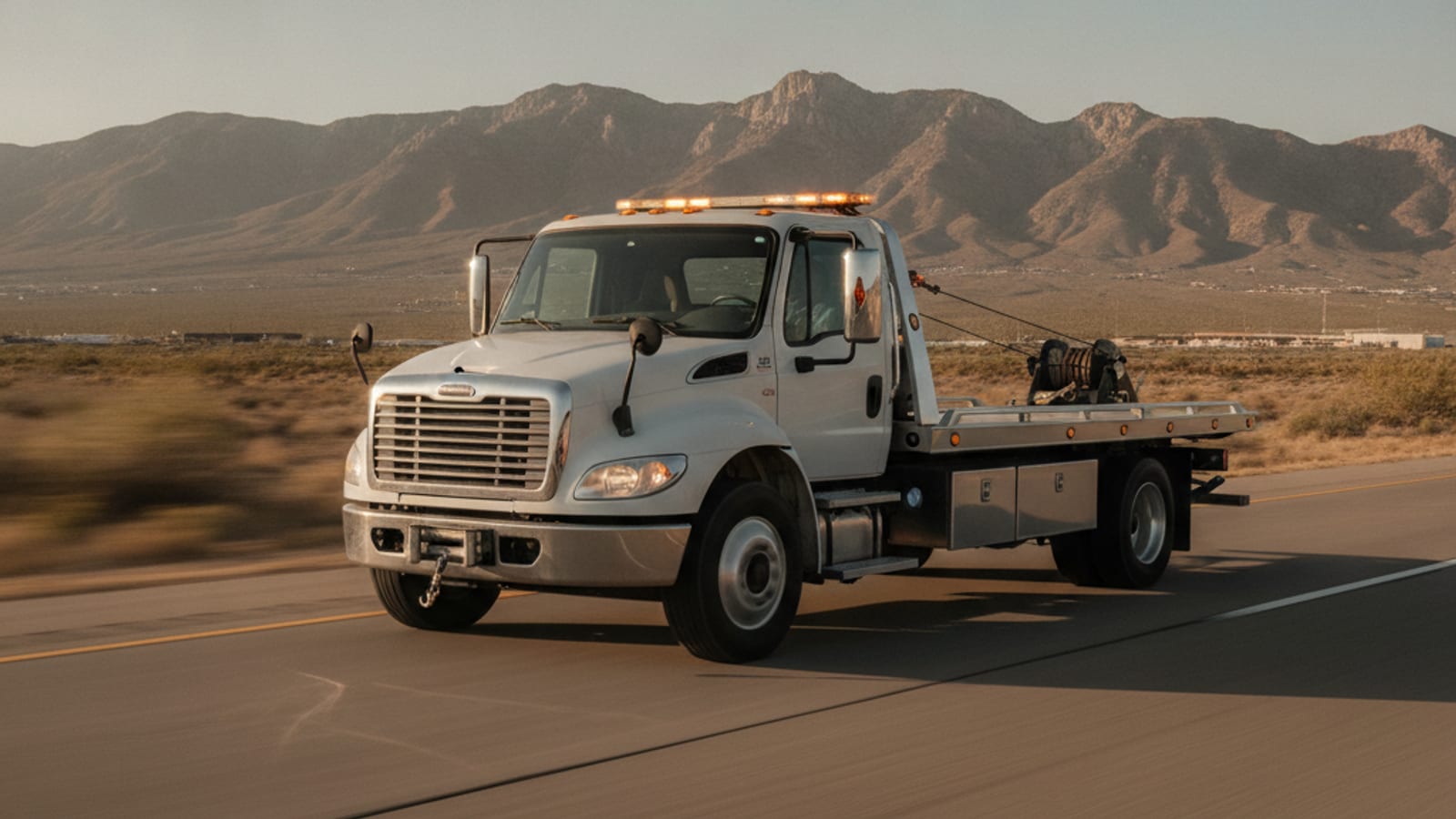
Drivers needing horizon towing can reach 24/7 dispatch at (915) 615-2224 for immediate help. The operators we connect you with cover all of Horizon City. This includes the entire FM-1281 corridor, the I-10 and Eastlake interchange, and every residential street. A breakdown out east requires a specific response. You need a truck routed directly to your exact location. Being stranded in the desert heat is stressful. Local operators understand the layout of the east side and know the fastest routes to reach you.
Why Horizon City towing requires a different response
Horizon City is a distinct, fast-growing community. It incorporated on October 22, 1988. The 2020 census counted 22,489 residents here. That’s a 34 percent increase from 2010. The median age is just 29. More than a third of the population is under 18. This means Horizon City is full of young, commuting families. Most of them drive into central El Paso or out to Fort Bliss for work, and most of that trip happens on I-10.
Distance changes how roadside assistance works. A tow truck dispatched from central El Paso takes time to arrive. Local operators familiar with the east side get to you much faster. The layout of the area also matters. Horizon Boulevard, or FM-1281, serves as the single main commercial spine. Growth spreads out from this central artery. The community has specific boundaries that affect routing.
Horizon City itself splits between two school districts. The westernmost side of town sits in Socorro ISD, home to Eastlake High School. The rest of the community falls under Clint ISD, home to Horizon High School. A local driver knows which zone you mean without asking twice. They don’t waste time searching the wrong neighborhood. When you request Horizon City towing, that kind of regional knowledge matters.
The residential streets continue to expand rapidly. Navigating these new subdivisions requires updated local routing. The professionals we dispatch know these neighborhoods intimately. They understand how the community connects to the surrounding county. This prevents delays when you are waiting for a tow.
Navigating the FM-1281 corridor and I-10 Eastlake interchange
Most stranded driver calls originate along the primary traffic corridors. Eastlake Drive, off I-10, is the main way in from El Paso, and it feeds straight onto Horizon Boulevard. Heavy commercial traffic mixes with daily commuters at that entry point, especially during the morning and evening drive.
Horizon Boulevard, or FM-1281, is the main route through town. TxDOT has a corridor master plan covering this road, since it’s the single artery connecting Socorro, Sparks, and Horizon City to I-10. Most of the community’s commercial development fronts this road, so a car breaking down anywhere along it usually means sitting in or near live traffic.
If your car stalls on this route, you face heavy traffic. You need to clear the travel lanes quickly. The professionals we dispatch know these specific bottlenecks. They approach your vehicle with safety lighting activated. They secure your car and load it efficiently. You can learn more about our general coverage on our Horizon City towing service page.
Traffic patterns shift dramatically during school drop-off hours. The corridors around the high schools become highly congested. A breakdown during these times requires a strategic tow response. If you break down further west, we also connect drivers with towing in Socorro. The network provides reliable coverage across these connecting municipal lines.
Desert heat and commuter vehicle strain
El Paso’s summer normal high runs in the mid-to-upper 90s, per National Weather Service climate data, with plenty of days pushing past that. That kind of heat wears down vehicle components fast. Radiator failures show up often on FM-1281 and I-10 in the summer months, and so do tire blowouts. Asphalt temperature runs well above air temperature, and that bakes rubber and can cause tread separation at highway speeds.
A young, growing commuter community leans on older vehicles more than a wealthier suburb would, and a daily highway commute puts real strain on an aging cooling system. When a water pump fails on a residential street with no tree cover, the engine can overheat in minutes and there’s very little shade while you wait.
Getting a tow truck in Horizon City fast is a safety priority. Heat stroke is a real risk on the side of a desert highway. You should stay inside your vehicle if it’s safe. Keep the air conditioning running if the engine still idles. If the engine is dead, roll down the windows. Drink water while you wait for the operator to arrive.
Battery failures also spike during the summer months. The extreme temperatures boil the internal fluids of a car battery. If your battery dies from the heat, the network provides dead battery jump start services in El Paso. The operators carry professional jump boxes to start your engine. If the battery won’t hold a charge, they tow your vehicle.
Understanding Texas towing rules in Horizon City
The State of Texas regulates how towing operates. The Texas Department of Licensing and Regulation oversees these rules. The operators we dispatch hold the proper state licenses. Texas law outlines specific rights for vehicle owners during a tow.
Most calls to dispatch result in a consent tow. This means you requested the service for your own broken-down vehicle. You control exactly where the truck takes your car, and dispatch confirms the rate with you before the truck ever leaves for your location.
A non-consent tow happens differently. This occurs when police order a vehicle removed from a roadway. It also happens if a car is parked illegally on private property. Texas sets strict maximum fees for non-consent tows. The state caps the charge at $272 for vehicles weighing 10,000 pounds or less. This applies if your car is towed without your authorization.
If you return to your car while it is being hooked up, drop fees apply. Texas limits this drop fee to a maximum of $135 for standard vehicles. The operator must accept cash, credit cards, and debit cards for this fee. If the car isn’t fully hooked up yet, they must release it at no charge. The operators we connect you with follow all TDLR regulations.
What to tell dispatch to get the right truck fast
Clear information gets a truck to your location faster. When you call (915) 615-2224, start with your exact location. Name the cross street or a visible landmark. Tell the dispatcher your direction of travel. Mention if you are eastbound toward Clint or westbound toward I-10. This prevents the driver from having to turn around on a busy divided road.
Next, describe your vehicle accurately. State the make, model, and color. Mention if you drive a heavy-duty pickup or a low-clearance sedan. This ensures dispatch sends the correct equipment. A flatbed tow truck is necessary for all-wheel-drive vehicles. Standard wheel-lift trucks work perfectly for front-wheel-drive commuter cars.
Finally, explain the mechanical problem clearly. Tell the operator if you have a flat tire, a dead battery, or a blown engine. Detail whether your vehicle was involved in a collision. This helps the network prepare for either roadside assistance or emergency towing.
Safety should be your primary concern while on the phone. Pull your vehicle as far onto the right shoulder as possible. Turn on your hazard lights immediately. If you are near the I-10 interchange, the traffic moves at high speeds. Stay inside your vehicle with your seatbelt fastened.
Tell the dispatcher if your vehicle blocks a travel lane. This elevates the priority of the call. A stalled car in a moving lane is a severe hazard. The operators need to know if they must block traffic to load your car. They will activate their emergency lighting to protect the scene.
Texas law requires drivers to move over or slow down for tow trucks. The Move Over law applies to any stationary vehicle displaying visual signals. Approaching drivers must vacate the lane closest to the tow truck. If they can’t change lanes, they must reduce their speed. The law requires slowing to 20 miles per hour below the posted limit. This protects you and the operator while your car is loaded.
Frequently asked questions
Do the dispatchers and drivers speak Spanish?
Yes. Horizon City is a majority-Hispanic, Spanish-speaking community, and the dispatchers answer in both English and Spanish to make sure nothing gets lost. The operators we connect you with can talk through your towing needs entirely in Spanish.
Are both school district areas covered?
The network covers every part of the city. This includes the Eastlake High School area in the Socorro ISD zone on the west side. It also includes the Horizon High School area in the Clint ISD zone. Every residential street in between gets the same 24/7 dispatch.
Can I get a tire change instead of a full tow?
Yes. The professionals we dispatch provide mobile roadside assistance. If you have a usable spare tire, they can change it on the shoulder of FM-1281. If you lack a spare or have multiple blown tires, they will tow your vehicle to a local tire shop.
How long does a tow take at the I-10 and Eastlake interchange?
Response times depend on current traffic and time of day. The I-10 and Eastlake junction is a major priority zone due to heavy commercial traffic volume. Dispatch routes the closest available truck to get you off the highway shoulder quickly.
Where does my car go if it’s towed from a crash?
You choose the destination for a standard consent tow. The driver can take your car to your home, a local mechanic, or a dealership. If police order a non-consent tow due to a crash, the rules change. You can read our guide to find where a car was towed in El Paso for those specific situations.