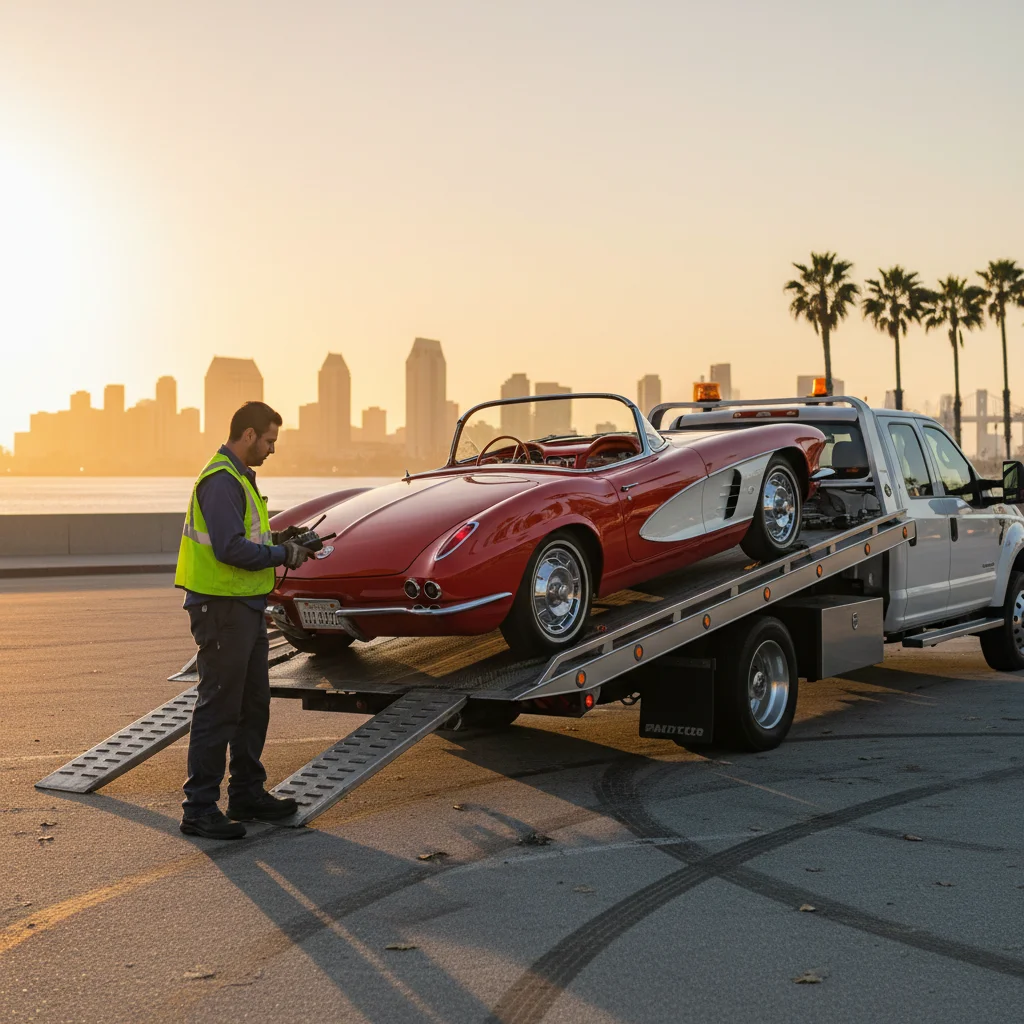
Flatbed, soft straps, no chains near the frame. That’s how a classic or exotic car should move in El Paso. If yours is stuck on the roadside right now, call (915) 615-2224 and tell us it’s a collector car before the truck even leaves the yard.
Why exotic and classic cars need different handling
A regular tow truck setup is built for daily drivers. Chain hooks grab the frame, the wheel-lift drags one axle off the ground, and the ramp angle assumes normal ground clearance. None of that works on a car that sits four inches off the pavement or has original paint worth more than the truck towing it.
Low, wide exotics like a Lamborghini or Ferrari can catch a front splitter on a standard flatbed ramp the second the incline gets steep. Lowered classics have the same problem for a different reason: decades-old suspension geometry that was never designed for a modern ramp angle. Either way, the fix is the same. A flatbed with a low-angle or extended ramp, plus wood blocks or ramp extensions to flatten the approach, gets the car on deck without a scrape.
Chains and hook-and-chain rigs are a bigger risk than they look. A frame hook that would be harmless on a pickup can crack a fiberglass body panel or bend a lower control arm on a car that was never built to take that kind of point load. Collector cars often have non-standard tie-down points too, so a driver who doesn’t know the car can end up strapping to the wrong spot entirely.
Flatbed or enclosed: which one you actually need
Flatbed is the baseline for any classic or exotic tow. The car rides fully off the ground, so there’s no drivetrain stress and nothing dragging on I-10 or a side street. That’s non-negotiable for anything with a manual transmission, all-wheel drive, or a drivetrain that wasn’t built for being towed on its own wheels.
Enclosed transport is the step up from there. It’s worth it for a longer haul, a show car headed to an event, or anytime you want the vehicle shielded from road debris and weather. In El Paso that matters more than in most cities. Dust storms, known locally as haboobs, peak in March and April and can sandblast a paint job in minutes on an open trailer. If you’re moving a car during that window, or the forecast even hints at blowing dust, enclosed is the safer call.
Read more on the difference in our guide to flatbed vs wheel-lift towing in El Paso, which breaks down why wheel-lift is off the table for anything low or classic.
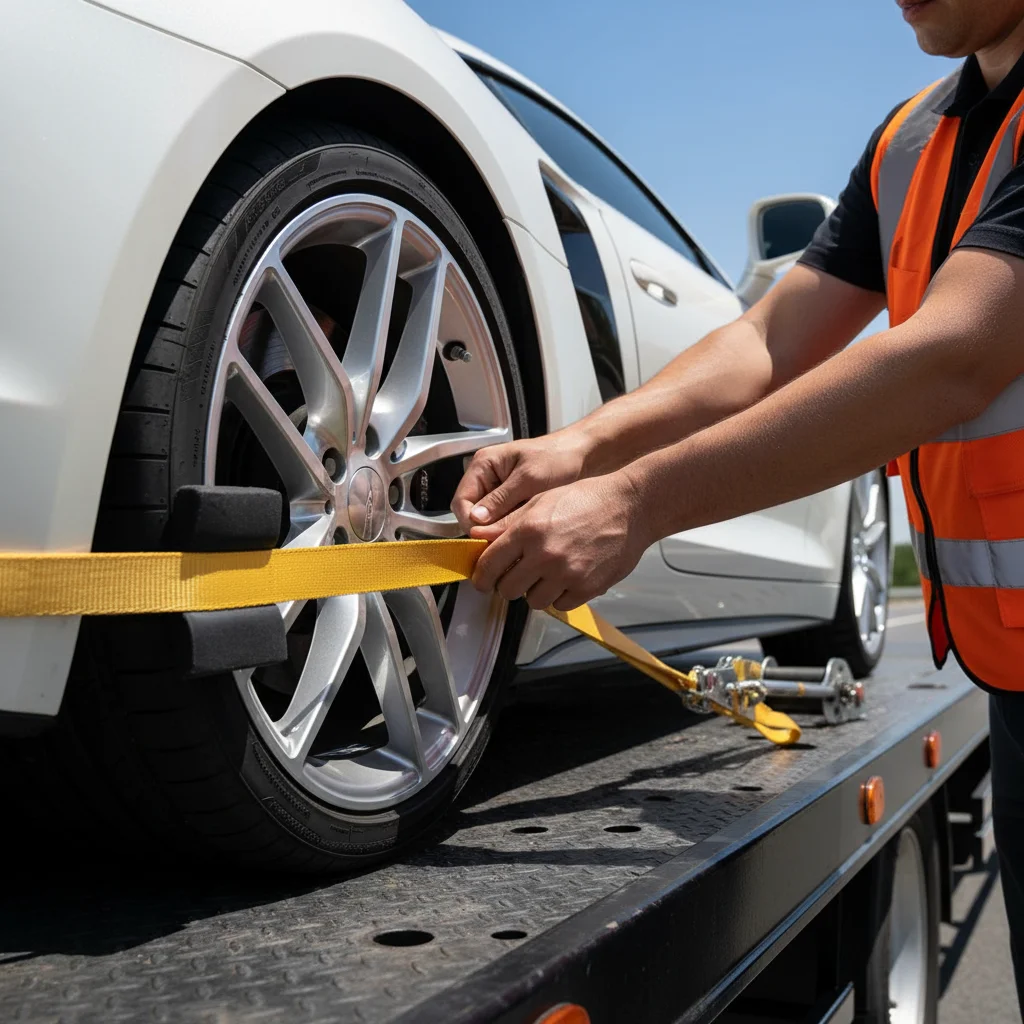
Soft straps, not chains
The standard for loading a classic or exotic is wheel straps or basket straps that wrap around the tire itself, not the frame or suspension. Soft straps distribute pressure evenly across the wheel and tire, so there’s nothing digging into paint, chrome, or brake lines. A tow operator who knows collector cars will check where the manufacturer’s actual tie-down points are before running a single strap, especially on older cars where the bumper or rocker panel wasn’t built to take a load.
Worn brakes and aging parking systems are common on classics that haven’t been driven regularly, so loading has to be slow and deliberate. Rushing a car up the ramp with weak brakes is how a $200 mistake becomes a $20,000 one.
The El Paso factors that matter
Two things about towing here are specific to the desert. First, dust storms. If a haboob rolls through while your car is exposed on an open flatbed, that’s real risk to the paint and finish, so timing and covering the vehicle matter during spring months. Second, heat. Summer pavement temperatures affect tire pressure and old rubber fluid lines on a car that may not have been driven in a while, so a driver who checks the car over before loading, rather than just winching it up, is doing the job right.
Gravel and road debris on I-10 are also a real consideration for any open transport. It’s one more reason enclosed is worth considering for a longer trip through the metro.
What to check before the truck arrives
Take a few minutes before your tow truck shows up:
- Note any existing paint chips, scratches, or dents so there’s a clear before-and-after.
- Point out non-standard tie-down points if you know them, especially on a modified or older classic.
- Ask whether the driver plans to use soft straps and a low-angle ramp, not chains and hooks.
- Mention if the car has weak brakes, a stuck parking brake, or low ground clearance up front.
FAQ
Can a flatbed damage a low exotic car during loading? It can if the ramp angle is too steep or the driver doesn’t use extensions. A low-angle or extended ramp, with wood blocks if needed, flattens the approach so the front end clears without scraping.
Do you use chains on classic cars? No. Chains and frame hooks aren’t appropriate for a collector car’s body or suspension. Soft wheel or basket straps are the right way to secure it.
Is enclosed transport necessary for every classic car tow? Not always. A short local tow on a calm day is usually fine on an open flatbed. Enclosed makes more sense for longer hauls, show cars, or when dust storms or bad weather are a factor.
What if my car has non-original tie-down points? Tell the driver before loading starts. A modified or restored classic sometimes has different structural points than stock, and a driver who knows to ask will load it correctly the first time.
Get your classic or exotic moved the right way
Your collector car deserves a driver who treats it like one. We run flatbed and enclosed transport with soft straps and low-angle loading for exotics and classics across El Paso. Learn more about our exotic and classic car towing service, or call (915) 615-2224 now and we’ll walk you through what to expect before the truck even arrives.