Can a tow truck refuse to take my car in Texas?
Yes - but only in specific situations defined by Texas law and tow-operator policy. Here is exactly when an operator can walk away, what your rights are, and what to do if you are refused service in El Paso.
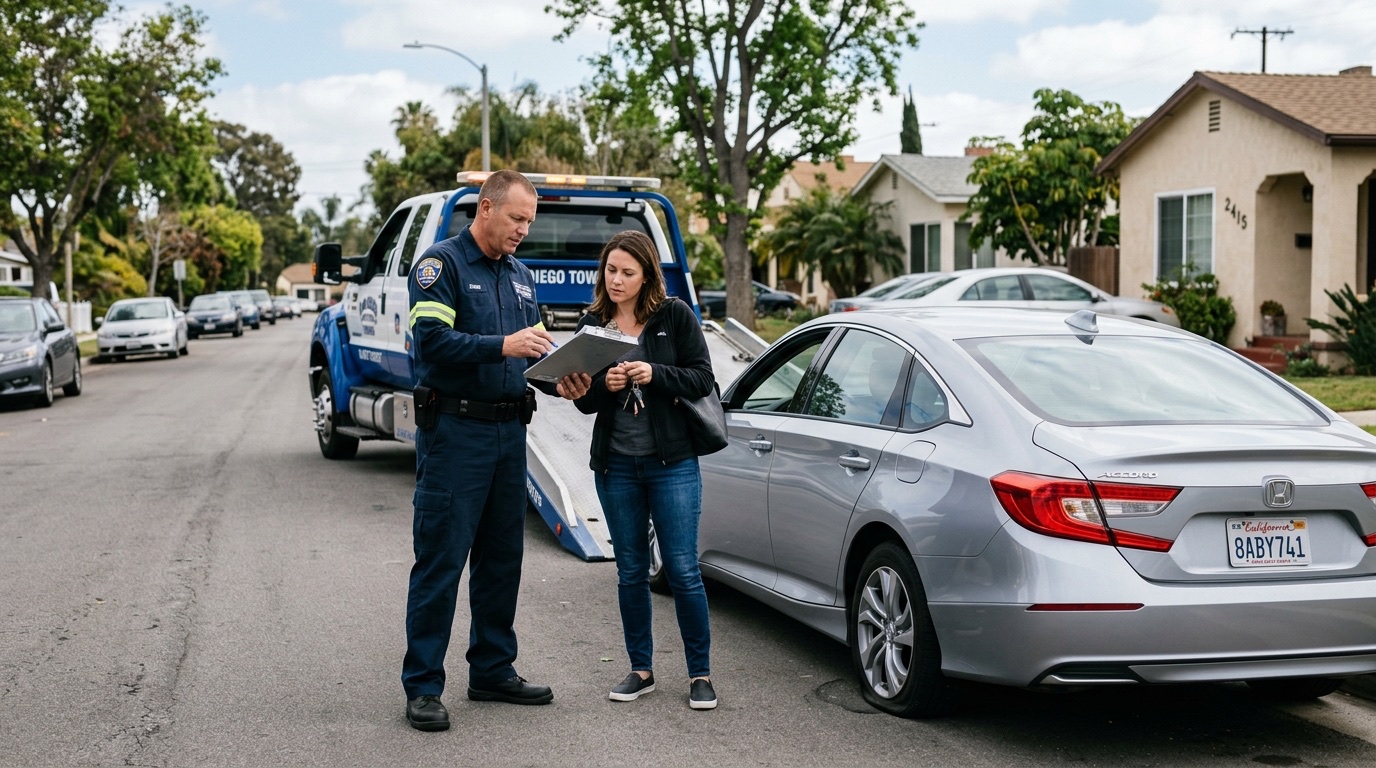
What you'll learn
- The 5 reasons a Texas tow operator can legally refuse a job
- When an operator MUST take the job (police dispatch, insurance dispatch)
- What TDLR rules actually say about tow operators
- Your rights as the vehicle owner if you are refused
- What to do next if no one will take your call
Step by step
- Reason 1 - Vehicle weight or size exceeds the truck rating (e.g., wheel-lift truck for an RV).
- Reason 2 - Vehicle is unsafe to tow (hazardous fluid leak, fire risk, structural collapse).
- Reason 3 - Driver cannot verify ownership (no registration, suspected stolen vehicle).
- Reason 4 - Location is unsafe for the operator (active hostile environment, no safe pull-off).
- Reason 5 - Operator does not service that area or that vehicle type (e.g., EV-only refusal from a non-EV-rated operator).
- When MUST they take it: police-dispatched scenes, and your own AAA/insurance dispatch on the operator they sent.
If a tow operator refuses your call and you are stranded in an unsafe location, call 911 (emergency) or your local non-emergency line. Police or DPS on scene can dispatch a tow operator directly.
The short answer
Yes, a Texas tow operator can refuse to take your vehicle - but only in specific situations defined by state law, the operator's own contracts, and operator policy. They cannot refuse you because they don't feel like making the trip, because you're not paying enough, or because they prefer another customer waiting in queue. If an operator refuses your call and the refusal doesn't fit one of the legitimate reasons below, you have recourse.
The 5 legitimate reasons a Texas tow operator can refuse
- The vehicle exceeds the truck's safe rating. A light-duty wheel-lift cannot legally tow a 26,000-pound box truck. The operator must dispatch the right equipment or refuse and refer you to a heavy-duty operator. TDLR rules require a tow truck to be equipped to safely move the vehicle being towed.
- The vehicle is unsafe to tow. Active fluid leak (gasoline, brake fluid, hydraulic), structural collapse, fire risk, hazardous cargo. Operators are not required to tow vehicles that pose a safety risk to the operator, other drivers, or property.
- Ownership cannot be verified. If you cannot produce a driver license, registration, or other proof that you have authority to move the vehicle, the operator can refuse. This is particularly important for vehicles flagged as stolen or for vehicles being moved without the owner's consent.
- The location is unsafe for the operator. Active hostile environment, no safe pull-off, an unstable hillside, a construction zone with no operator access. The operator may refuse pending the location being made safe (police escort, scene clearance, etc.).
- The operator does not service that vehicle type or that area. An EV-untrained operator may legitimately refuse a Tesla. An operator without flatbed equipment may refuse an AWD vehicle. An operator who only works the city may refuse a remote Lower Valley or desert call. They are required to tell you so you can call another operator.
When an operator MUST take the job
- Police-dispatched scenes. When law enforcement orders a tow at a scene, the agency on scene decides which operator handles it. If you're at a police-managed scene, ask the officer which company is coming and where the vehicle will go.
- Your insurance or motor club dispatching them to you. If AAA, Geico, Allstate, USAA, or another insurer/motor club has dispatched the operator to your location with your prior call, the operator is contractually bound to the motor club, not just to you. Refusal triggers contract penalties.
- An existing service agreement with your property. Operators contracted by an HOA, apartment complex, or commercial property must respond to property-management calls within the contract's response window.
Key Texas towing law
Transportation Code Ch. 545 - Law-enforcement authority to tow
Texas law lets a peace officer order your vehicle towed without your consent in many situations: parked in a fire lane, blocking a driveway, abandoned on a highway, evidence in a crime, the driver arrested, and more. If your vehicle was towed under a law-enforcement order, the towing was authorized by law and the operator is required to take it.
Texas Occupations Code Ch. 2308 - Private property (nonconsent) towing
Governs tows from private property (apartment lots, retail centers, HOA streets). Property owners must post specific signage, the operator must verify the violation, and the vehicle owner has tow-hearing rights in a justice of the peace court. If a property called a tow operator under Ch. 2308 and the operator arrived and found the violation cleared, the operator can refuse the tow without penalty.
Drop fees and pre-tow release
Under Texas nonconsent-tow rules, if you arrive before the tow operator has completed the hook and started moving the vehicle, you can demand release. The operator may charge a drop fee (set by the local fee schedule), but they must release the vehicle. If they refuse to release a vehicle that is not yet fully hooked, they are in violation.
Tow hearing rights (Occupations Code Ch. 2308)
You have 14 days from the date of the tow to request a tow hearing in the justice of the peace court for the precinct where the vehicle was towed. At the hearing, you can challenge whether the tow was authorized and whether the towing and storage fees are reasonable.
TDLR tow operator licensing
The Texas Department of Licensing and Regulation licenses tow trucks, tow operators, and vehicle storage facilities. The operator must hold a current TDLR license and a USDOT number for the carrier. If a driver refuses to show licensing when requested, that is a red flag.
Tow truck equipment requirements
TDLR rules require tow trucks to have the safety equipment, securing devices, and lighting to safely move the vehicle. An operator dispatched in a wheel-lift cannot legally tow a vehicle that requires flatbed; they must refuse and re-dispatch correctly.
Texas Property Code Ch. 70 - Vehicle storage liens
Governs how a vehicle storage facility can dispose of unclaimed vehicles. After the statutory notice period passes and the owner does not claim the vehicle, the facility can move toward a lien sale. If you're trying to recover a vehicle from storage, this is the timeline that matters.
Your rights as the vehicle owner
- Right to know who has your vehicle. If the police ordered the tow, the El Paso Police Department non-emergency line at (915) 212-4000 can tell you which storage facility was used.
- Right to a written, itemized invoice. Tow operators must provide a written breakdown of charges before you pay. Itemize hook fee, mileage, daily storage, and any gate fee. Refuse to pay charges that don't appear on the invoice.
- Right to retrieve personal property without paying the tow bill. Under Texas vehicle-storage rules, you can retrieve personal items (clothing, electronics, documents, child seats) from a stored vehicle without paying the tow bill first. Photo ID required.
- Right to a tow hearing. Within 14 days of the tow, in the justice of the peace court for the precinct where the vehicle was towed.
- Right to refuse a tow operator who cannot show a TDLR license. Licensing must be available on request.
- Right to insist on flatbed for EVs, AWD, lowered, or damaged vehicles. The operator must use safe equipment under TDLR rules.
What to do if an operator wrongfully refuses you
- Document the refusal. Get the operator's name, TDLR license number, license plate of the truck, time, and stated reason for refusal.
- Call another operator immediately. Don't wait. Quick Tow El Paso or another reputable operator will dispatch.
- If you're stranded in an unsafe location, call 911 or the local non-emergency line. Police or DPS on scene can dispatch a tow operator directly.
- If the refusing operator was dispatched by your motor club or insurer, call the motor club back. They are bound to send someone; the refusing operator is in breach of their contract with the motor club.
- File a complaint with TDLR. TDLR regulates tow operators in Texas. A pattern of wrongful refusal is grounds for investigation and license action.
- For property-tow disputes (Ch. 2308), request a tow hearing within 14 days. The justice of the peace will determine whether the tow was authorized and whether fees were reasonable.
El Paso-specific patterns we see
- Predatory private-property tows. Some property-tow operators have been investigated for predatory enforcement (towing legally parked vehicles, falsifying signage compliance, charging excessive drop fees). If you were towed and the property does not have Ch. 2308-compliant signage at every entrance and inside the lot, you have grounds to challenge the tow at a hearing.
- Cross-border vehicle tows. With Ciudad Juárez right across the river, operators occasionally refuse to tow vehicles registered in Mexico, citing insurance or registration issues. The operator must clearly state their reason; you have the right to dispute and call another operator.
- Cross-state tows into New Mexico. A tow that crosses into Sunland Park, Santa Teresa, or Chaparral falls under Doña Ana County and New Mexico rules, not Texas TDLR/VSF rules. An operator may refuse if they aren't set up to store or release a vehicle under New Mexico law. They should refer you to one who is.
- Heavy-duty refusal cascades. A box truck or RV breaks down on I-10 and a wheel-lift operator arrives, then refuses. This is correct - they shouldn't tow what they can't handle. They are required to refer you to a heavy-duty operator or call for one to be dispatched. If they leave without re-dispatching, that's a violation.
- EV refusals. An EV breaks down and a wheel-lift-only operator says they can't help. Correct - they shouldn't wheel-lift an EV. They are required to refer you to a flatbed operator. Quick Tow El Paso takes these calls when other operators refuse them.
When Quick Tow El Paso has refused calls (and why)
We've refused calls when: (1) The vehicle had an active gasoline leak that other operators on scene were already addressing. (2) The location was inside an active police perimeter and we couldn't get clearance. (3) The caller couldn't produce ID or registration and the vehicle was flagged as a possible recovered-stolen by El Paso PD. (4) The vehicle was over our gross weight rating - we dispatched a heavy-duty partner instead. Every refusal is documented and the customer gets a clear explanation and a referral.
Filing a complaint - useful contacts
- Texas Department of Licensing and Regulation (TDLR) - regulates tow operators and vehicle storage facilities in Texas. Online complaint form at tdlr.texas.gov.
- City of El Paso Municipal Vehicle Storage Facility - 11615 Railroad Drive, El Paso, TX 79934, (915) 212-0205, open 24 hours, for vehicles towed by the city.
- El Paso Police Department - (915) 212-4000 non-emergency, for tows ordered by El Paso PD.
- El Paso County District Attorney - Consumer Protection - for repeated predatory patterns by a single operator.
- Justice of the Peace court (El Paso County) - to request a tow hearing within 14 days.
Rather have a pro handle it?
24/7 towing and roadside across the El Paso metro, handled by licensed local operators.
Keep learning.
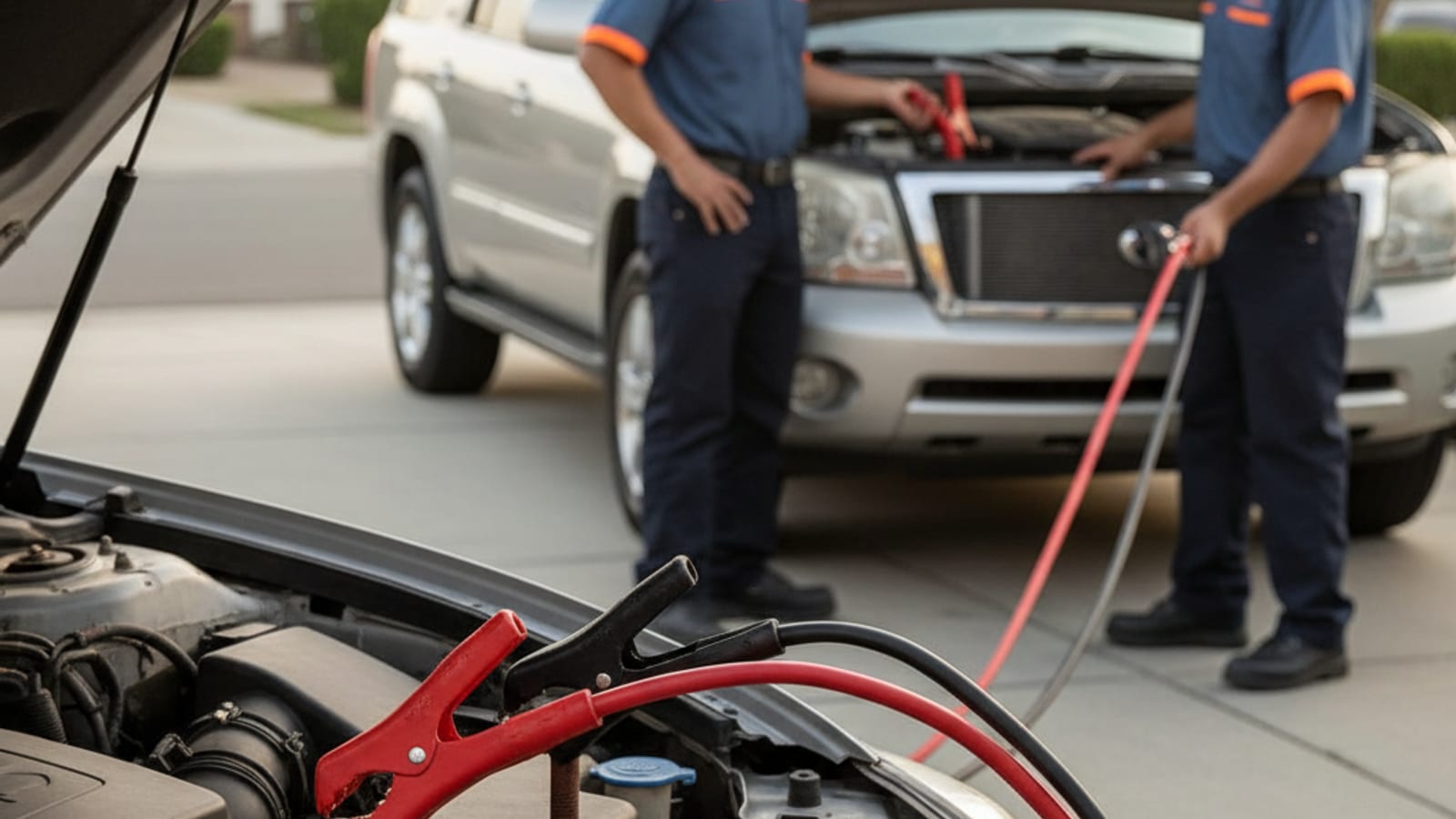
Jump-start a dead battery safely
Jumper cables are simple until you hook them wrong. Do it right and you'll avoid sparks, ruined electronics, and a tow you didn't need.
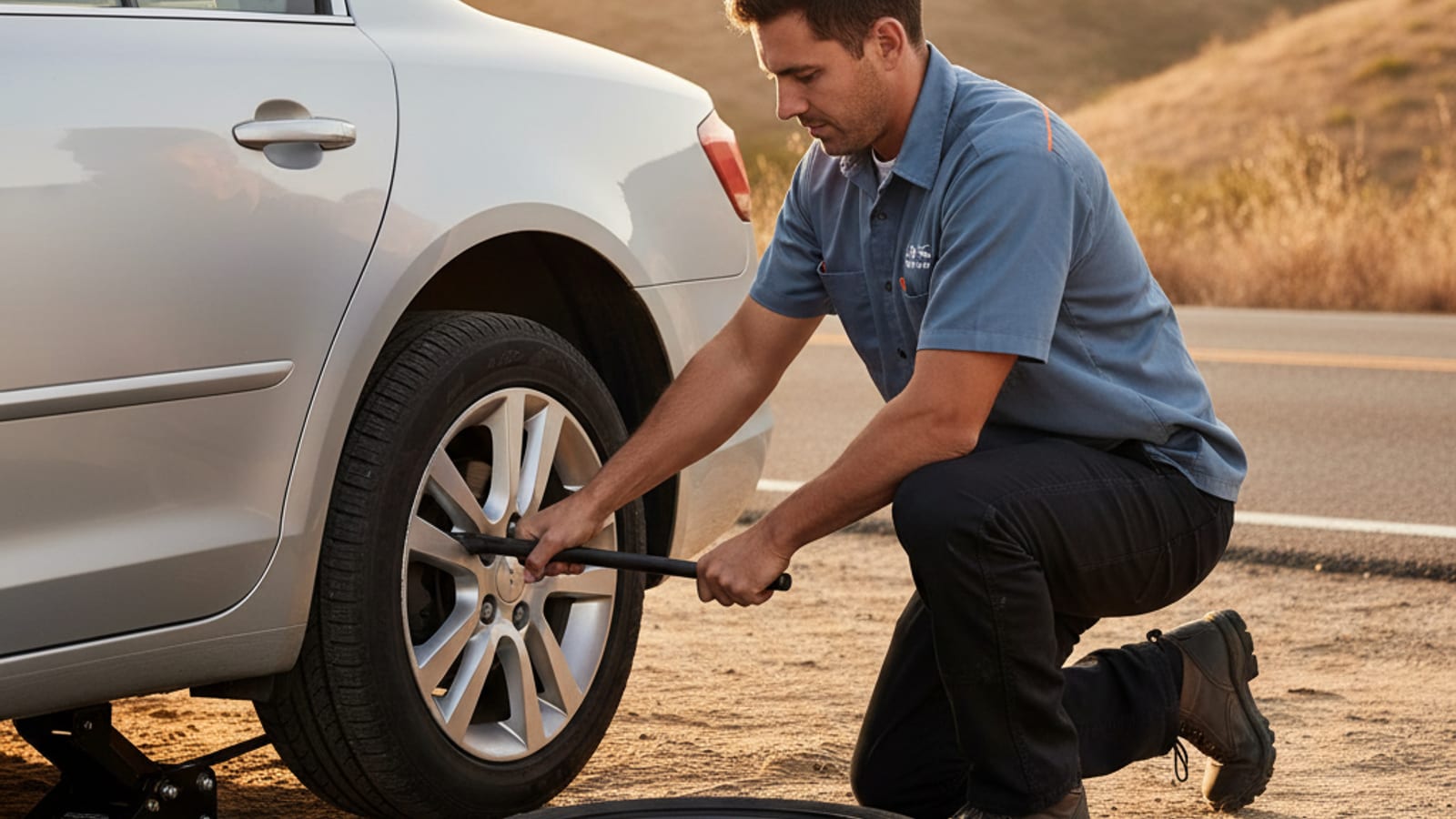
Change a flat tire on the side of the road
The difference between a 20-minute shoulder stop and an hour on the phone with a tow company is knowing where the spare and jack live before you need them.
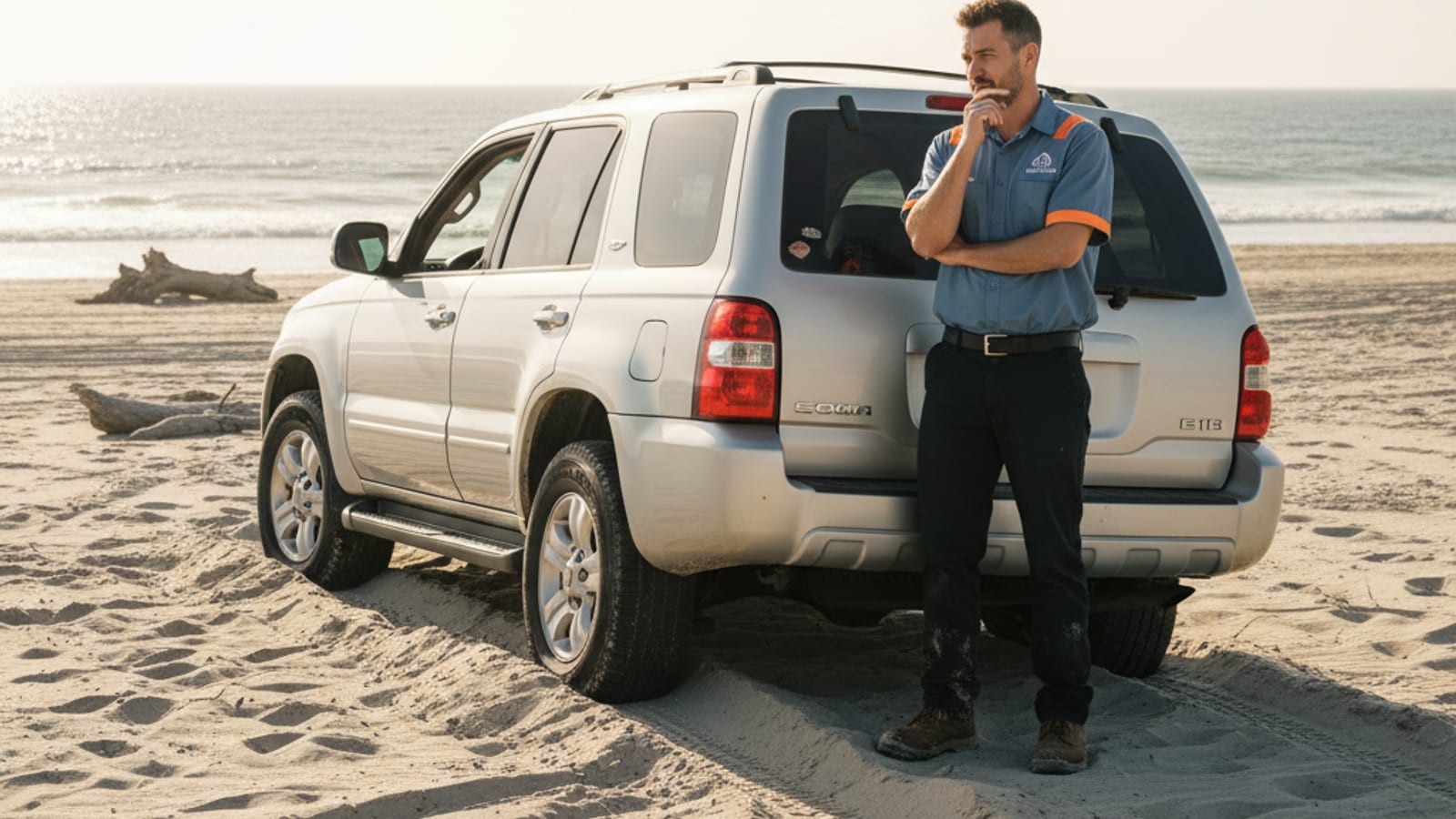
What to do when stuck in sand or mud
Red Sands, the Hueco Tanks back roads, and the Rio Grande arroyos eat vehicles weekly. The first thing to do is stop making it worse.