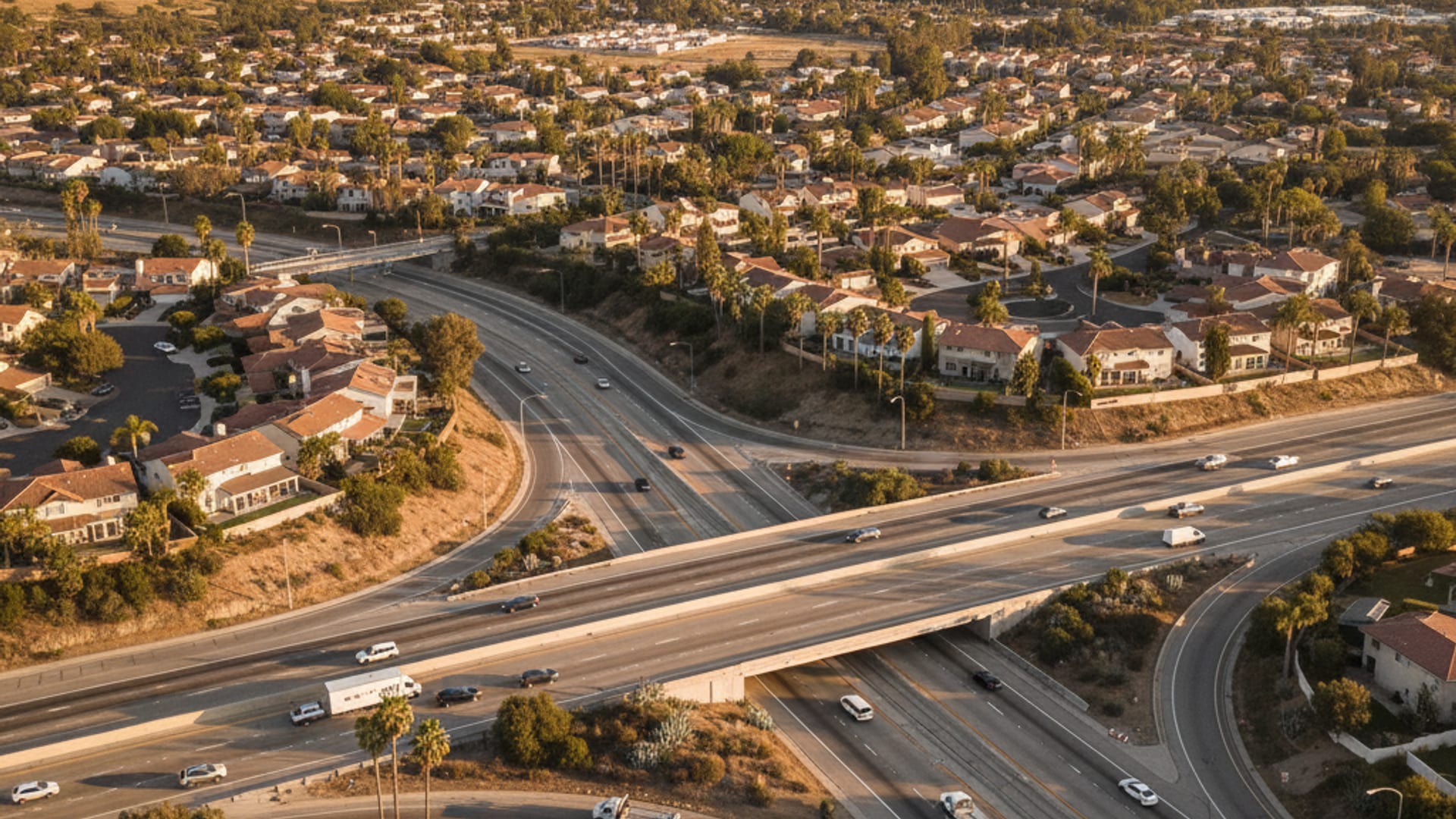
If your temperature gauge spikes on the Transmountain climb, pull off immediately, shut off the AC, and let the engine idle, or kill it entirely if the gauge hits red. Do not open the radiator cap. Call a tow at (915) 615-2224. On a 100°F+ summer day, a car that’s already borderline will overheat on this grade before it reaches Smuggler’s Pass. Getting off the road fast is what keeps a bad situation from becoming a dangerous one.
Why Transmountain Road overheats engines
Woodrow Bean Transmountain Drive, part of Loop 375, crosses the Franklin Mountains at Smuggler’s Pass, the only break in the mountain range that splits El Paso in two. The climb from I-10 on the west side to the summit is steep, sustained, and relentless. Your engine works hard for every mile of it.
Cooling systems are designed around level roads at moderate temperatures. Transmountain gives them neither. The grade forces the engine to produce more heat right when the thin, high-desert air offers less cooling. Radiator fans spin at full speed, coolant circulates as fast as it can, and for a lot of vehicles it’s still not enough.
Now add the summer heat. El Paso’s average high sits above 100°F from June through August, with peaks that push 108°F or higher. The asphalt on Transmountain bakes. The air coming through the front grille isn’t the cool air your radiator expects. When the outside temperature is already that high, your cooling system’s margin for error essentially disappears.
The summit at Smuggler’s Pass sits at roughly 5,280 feet. That altitude matters. Thinner air means the engine has to burn more fuel to produce the same power, which generates more heat. If your coolant level is a little low, your thermostat is running a little old, or your radiator hasn’t been flushed recently, Transmountain on a July afternoon will find that weakness.
Older vehicles and those with deferred maintenance are especially vulnerable. But plenty of newer cars overheat here too, particularly during slow traffic periods. If you’re crawling up the grade because of a backup near the Franklin Mountains State Park entrance, your engine is working hard with almost no airflow to help it.
What to do when the temperature gauge starts climbing
The order of operations matters here. Do these things in sequence.
- Turn off the air conditioning immediately. AC puts significant load on the engine and forces the cooling system to work harder. Turning it off can drop the temperature several degrees in under a minute.
- Turn the heater on full blast. It sounds miserable, but the heater core pulls heat out of the coolant. It works. Roll the windows down and let it run.
- Look for a pullout. Transmountain has a handful of pullout areas and the Franklin Mountains State Park entrance. Get there. If nothing is close, the shoulder is your target. Get as far off the travel lane as you can.
- Stop the car if the gauge hits red. An overheating engine that keeps running will warp the head gasket or seize entirely. That’s a several-thousand-dollar repair versus a tow call. Stop.
- Do not open the radiator cap. The cooling system is pressurized and the coolant is boiling. Opening the cap releases that pressure instantly, which can spray scalding water. Wait at least 30-45 minutes for the engine to cool before touching it.
- Call for a tow. (915) 615-2224. Give the dispatcher your direction of travel (eastbound toward El Paso / westbound toward I-10) and your approximate location. Whether you’re above or below the Franklin Mountains State Park entrance is a useful landmark.
The one thing you should not do is try to push through it. Some drivers see the gauge climb, slow down, and keep going hoping to make the summit. If the coolant is already boiling inside the block, more miles means more damage. Pull off and call.
Dust, wind closures, and the visitor angle
Transmountain Road closes during high-wind events. The Franklin Mountains funnel and amplify desert wind in ways that can make the road impassable, and TxDOT has closed the road during the worst of it. If you’re planning to drive the corridor on a windy day, check road conditions before you go. A closure means a long detour through the city.
The Tom Mays area and the scenic drive access within Franklin Mountains State Park draw visitors from across the region and from out of state. Out-of-towners unfamiliar with the grade, the altitude, and the heat regularly get caught off guard here. If you’re visiting from a lower, cooler city and your car has never seen a sustained climb in 105°F heat, Transmountain is where you’ll find out.
If your vehicle breaks down near the state park entrance or anywhere on the grade, local towing response is faster than waiting for roadside assistance programs that dispatch from outside the city. A local truck already knows the road, the pullout locations, and how to safely navigate the grade with a vehicle on the hook.
Frequently asked questions
What do I do if my car overheats on Transmountain Road?
Pull off the road as soon as you can find a safe spot. Turn off the AC, turn the heater on full, and let the engine idle briefly, then shut it off if the gauge stays in the red. Do not open the radiator cap. Call a tow at (915) 615-2224 and stay with your vehicle. Give the dispatcher your direction of travel and your nearest landmark, like the Franklin Mountains State Park entrance.
Why do cars overheat on Transmountain Road?
The combination of a steep, sustained grade and triple-digit summer heat pushes cooling systems past their limit. The engine produces extra heat climbing the grade while the desert air provides less cooling than the radiator needs. High altitude thins the air, which compounds both problems. Vehicles with low coolant, aging thermostats, or dirty radiators are most vulnerable, but even well-maintained cars can overheat during slow traffic on the grade in peak summer.
Can I keep driving if my engine is overheating?
No. If the gauge is in the red, stop. Continuing to drive an overheating engine risks a blown head gasket or a seized motor, both of which cost far more to repair than a tow. The damage can happen in minutes. Pull off, shut it down, and let it cool before assessing whether you can add coolant and continue or need a tow.
Who do I call for a tow on Transmountain Road?
Call Quick Tow El Paso at (915) 615-2224. We cover Transmountain Road and throughout west El Paso and the surrounding area. A flatbed is often the right equipment on the grade, especially if the vehicle can’t be safely driven. Our dispatcher will confirm your location and let you know an estimated arrival time.
How long does a tow take to reach Transmountain Road?
Response times depend on traffic and where the nearest available truck is. The road is not remote. It connects two heavily used parts of the city, and trucks work both sides. Calling sooner rather than waiting to see if the problem resolves gets you a faster response.
How much does a tow cost on Transmountain Road?
Tow costs in El Paso vary by distance and vehicle type. For a typical passenger vehicle and a tow within the city, you’re generally looking at a $95 hookup plus a per-mile rate. Transmountain adds some complexity because the grade requires more care, but it’s not a remote location. For an accurate quote before the truck rolls, call (915) 615-2224. See our full breakdown of what a tow costs in El Paso for more context.
If your car breaks down or overheats on the Transmountain grade, don’t wait it out in traffic. Pull off, follow the steps above, and call (915) 615-2224. We cover the mountain, the state park corridor, and all of west El Paso.